Zeming Li, Manon Schaffner, Jan-Niklas Spoerr
Experimental Studio Parabase Carla Ferrando Costansa, Pablo Garrido Arnaiz
ETH, Zürich
Autumn Semester 2025
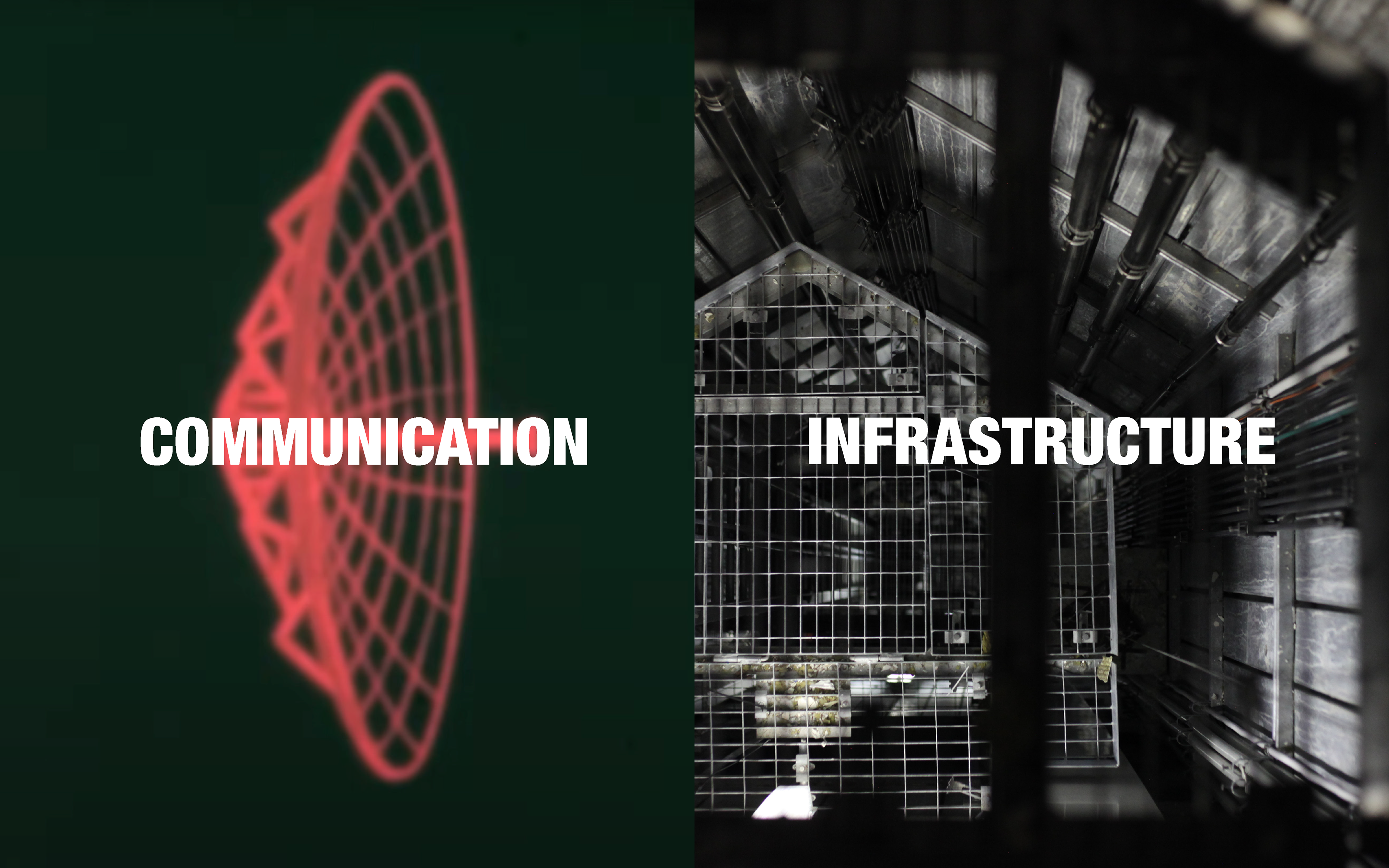
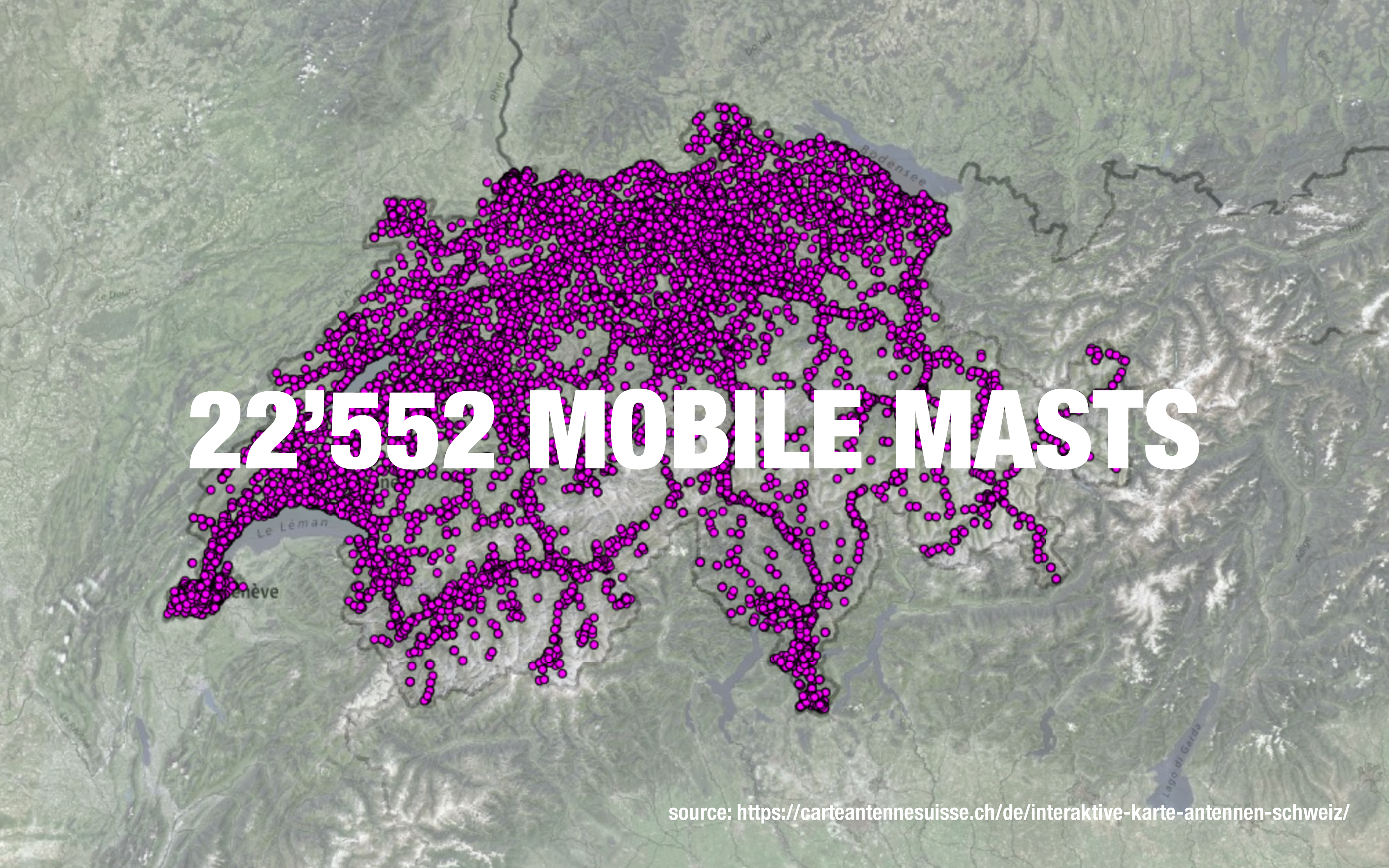
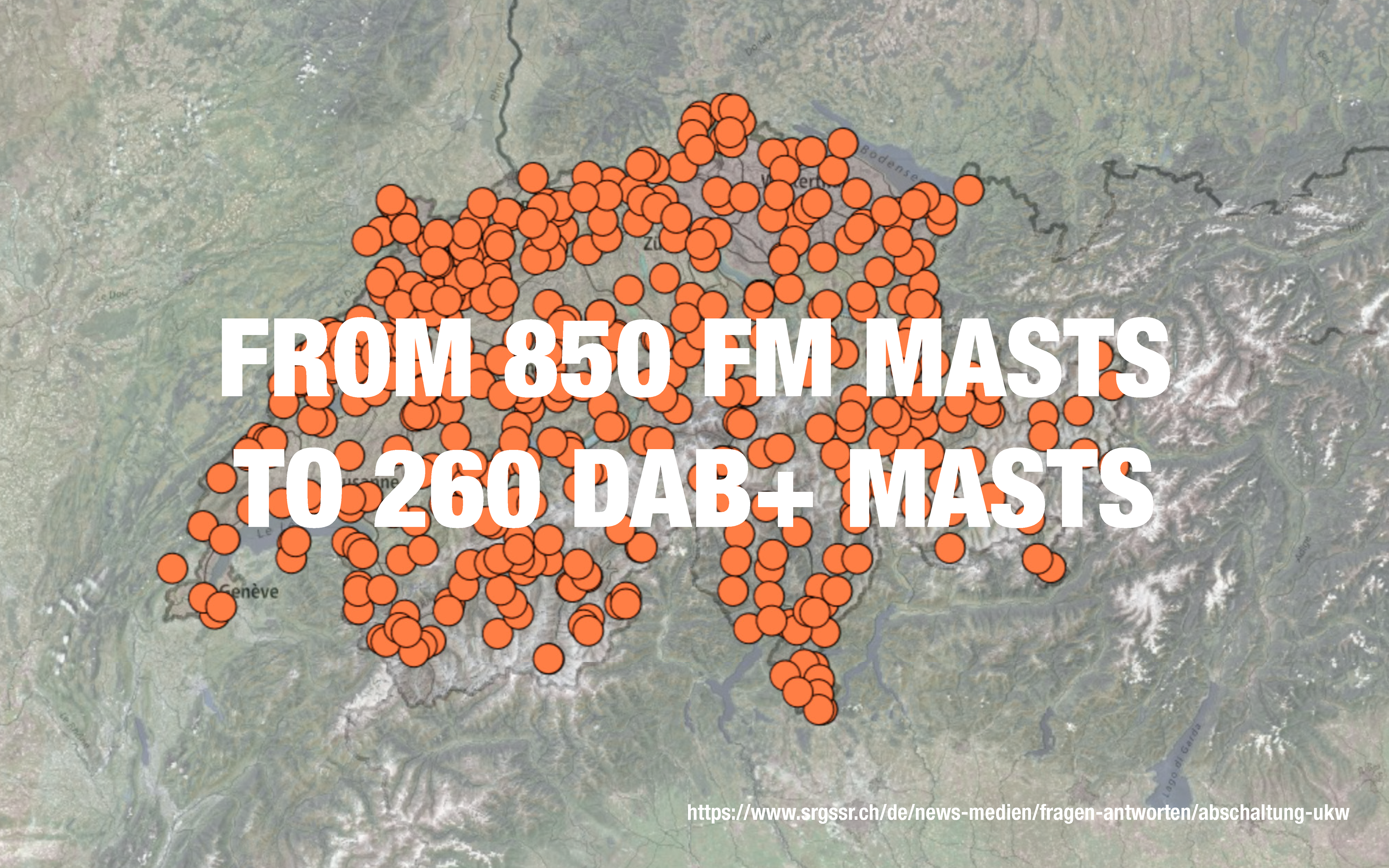
Communication infrastructure saturates the Swiss landscape. Over 22,500 mobile masts punctuate hilltops, roadsides, and urban rooftops—vertical elements so ubiquitous they become invisible. Yet this network is not static: technological transitions continuously render portions obsolete. As Switzerland completes its shift from analog FM radio to digital DAB+ broadcasting, the number of required transmission sites drops from 850 to just 260. Hundreds of steel monopole towers face decommissioning, their precisely engineered components destined for scrap.

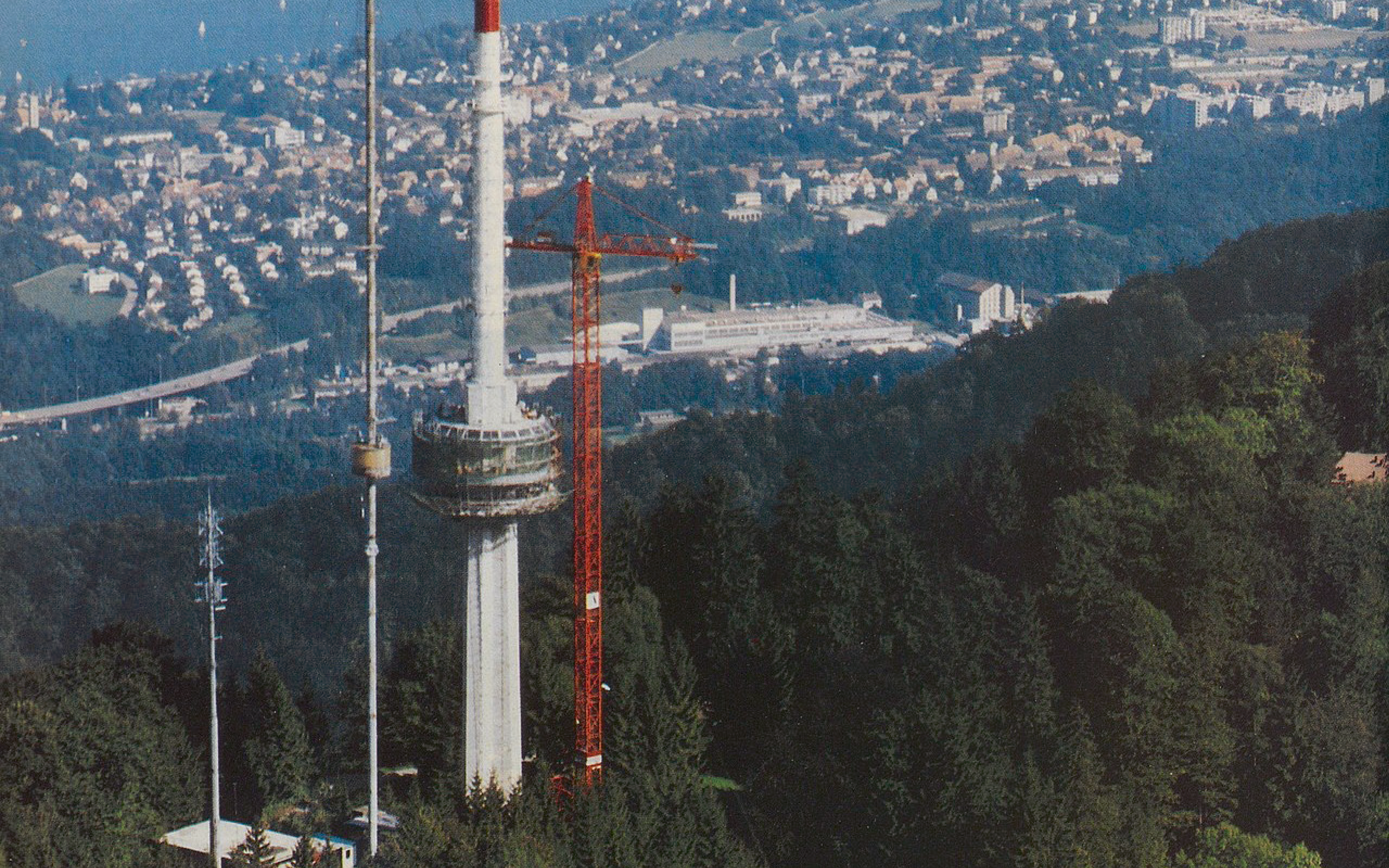
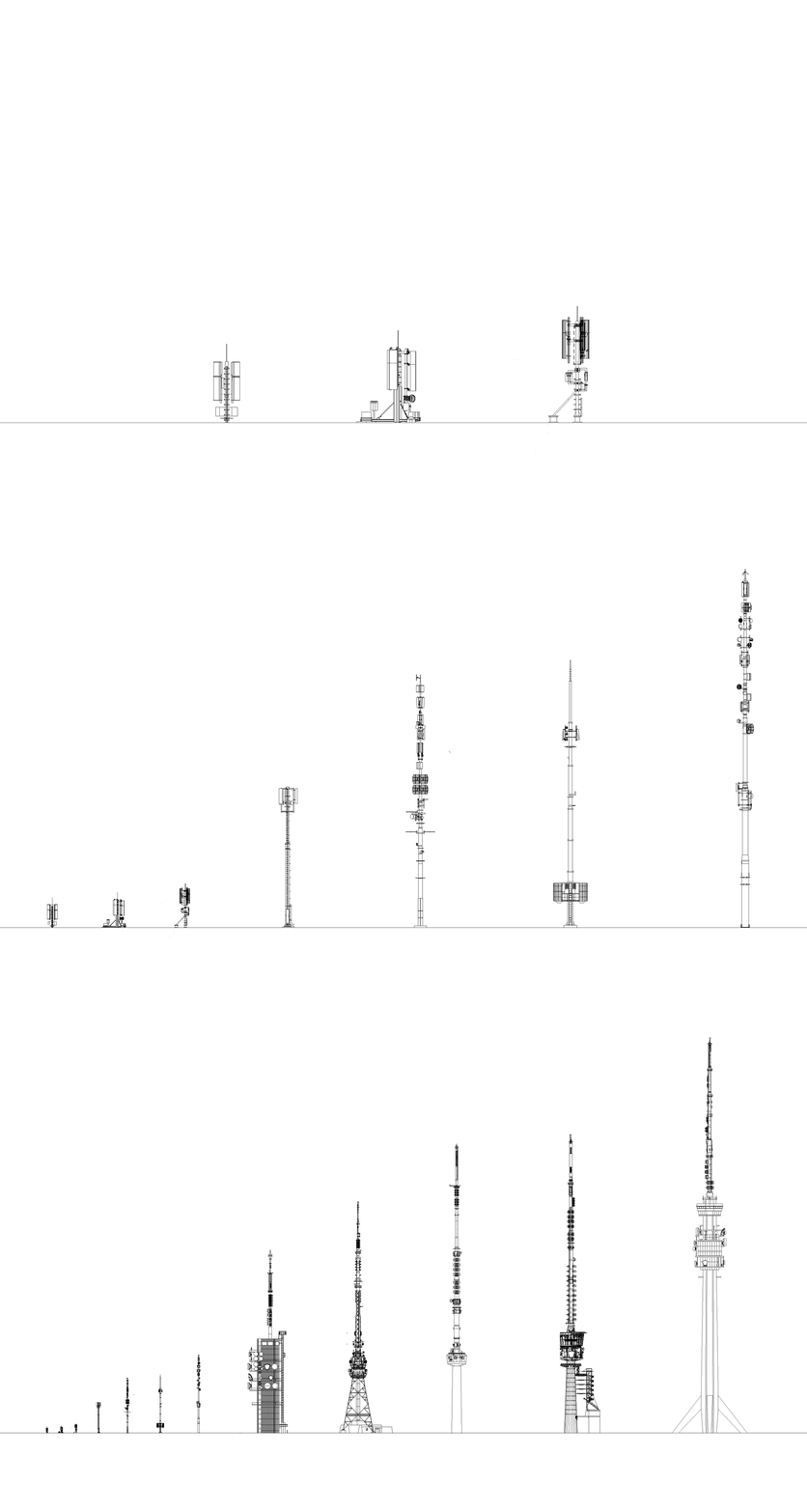
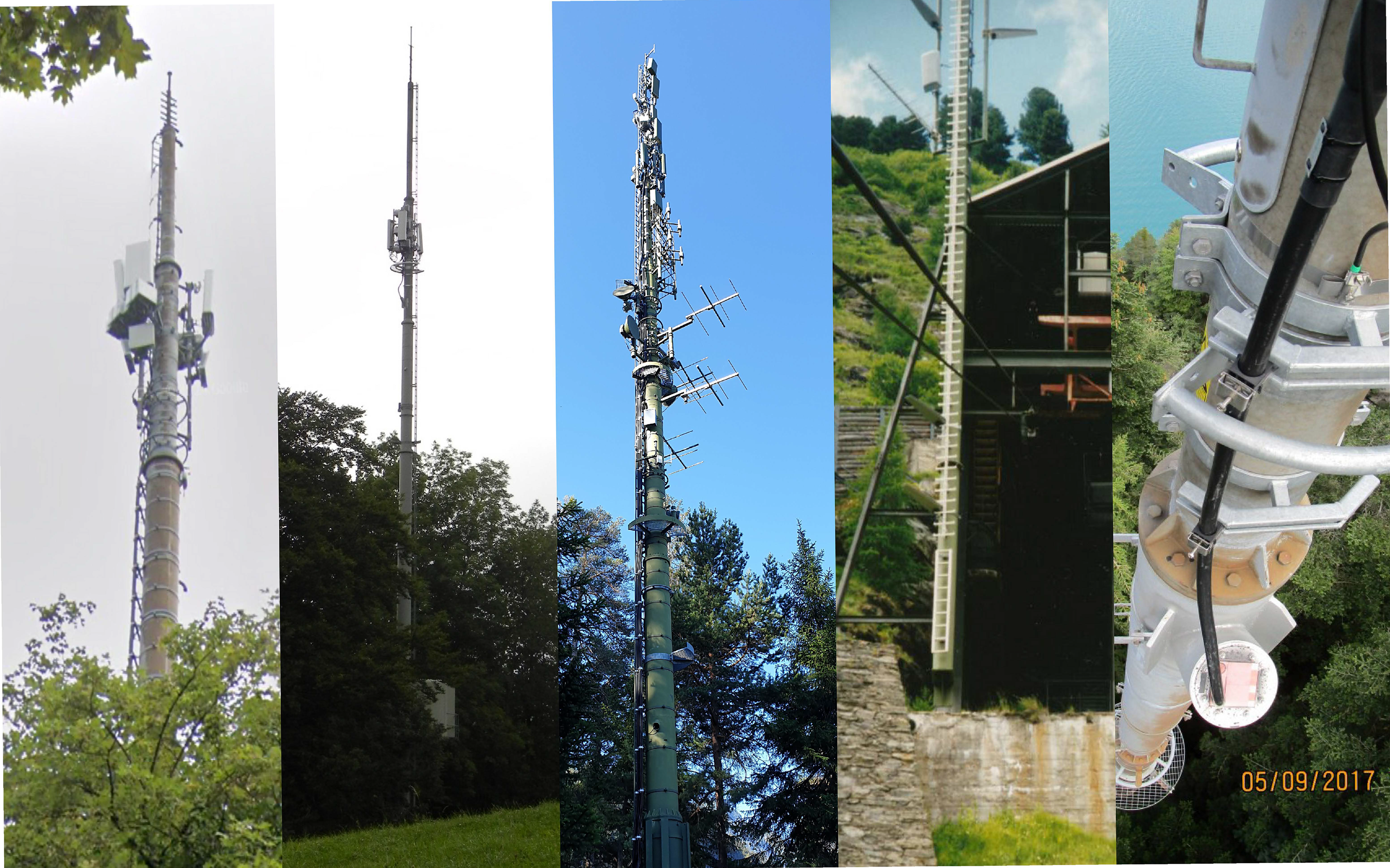
Telecommunications monopoles are tapered hollow steel tubes, typically assembled from bolted segments ranging from 3 to 6 meters in length. Diameters vary from approximately 200mm at tower tops to over 1200mm at the base. Wall thicknesses of 5–10% of diameter yield exceptional structural performance: these sections are engineered to resist severe bending loads imposed by wind on cantilevered antenna arrays.
This bending resistance makes monopole components ideal for inclined structural applications. Comparative analysis reveals striking efficiency: to achieve equivalent moment capacity, cross-laminated timber requires approximately 12 times the material volume, reinforced concrete 10–15 times. The hollow circular geometry places material at maximum distance from the neutral axis, optimizing both strength and stiffness while minimizing weight.
Each decommissioned tower yields a unique inventory of components—no two identical in dimension.
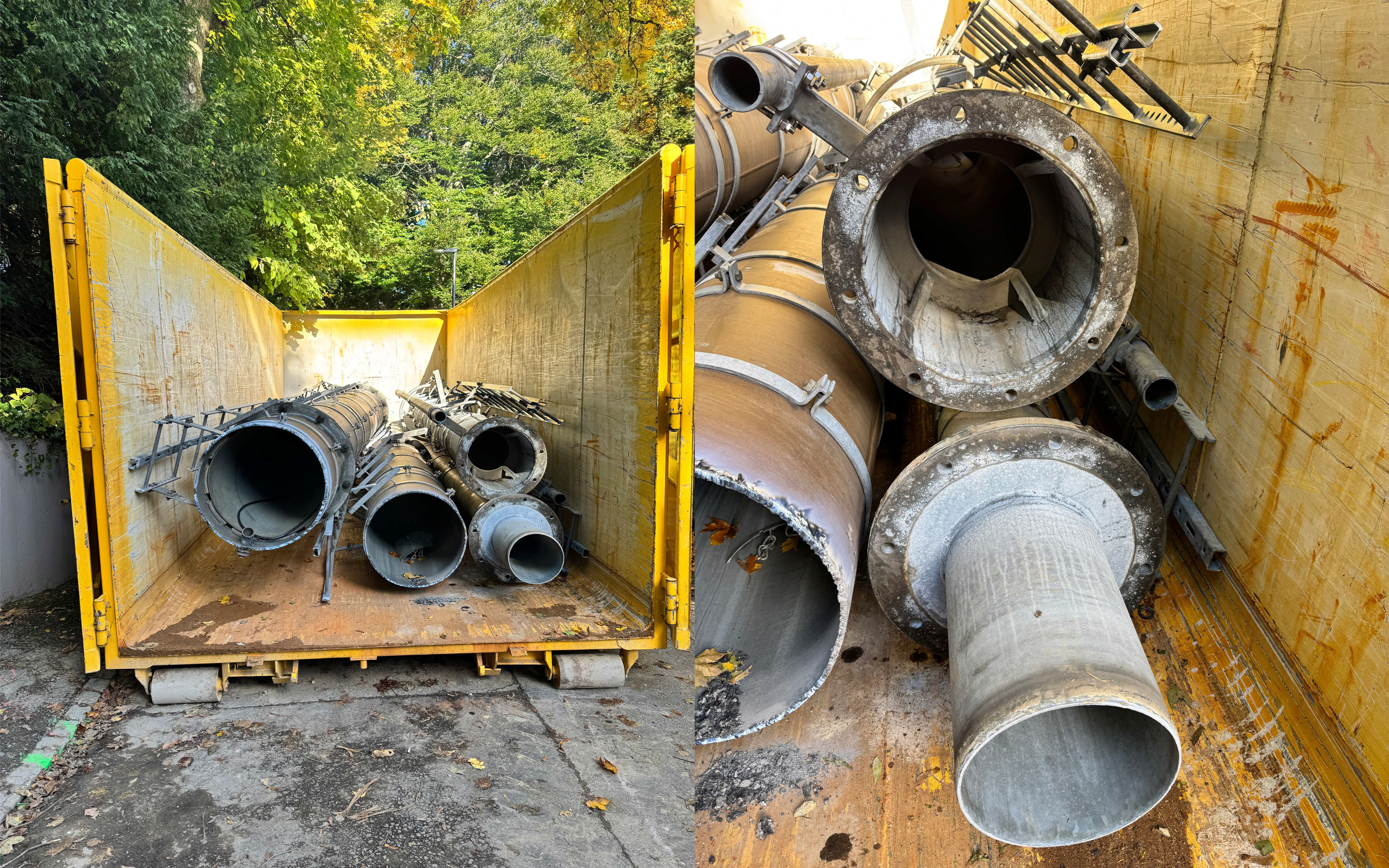
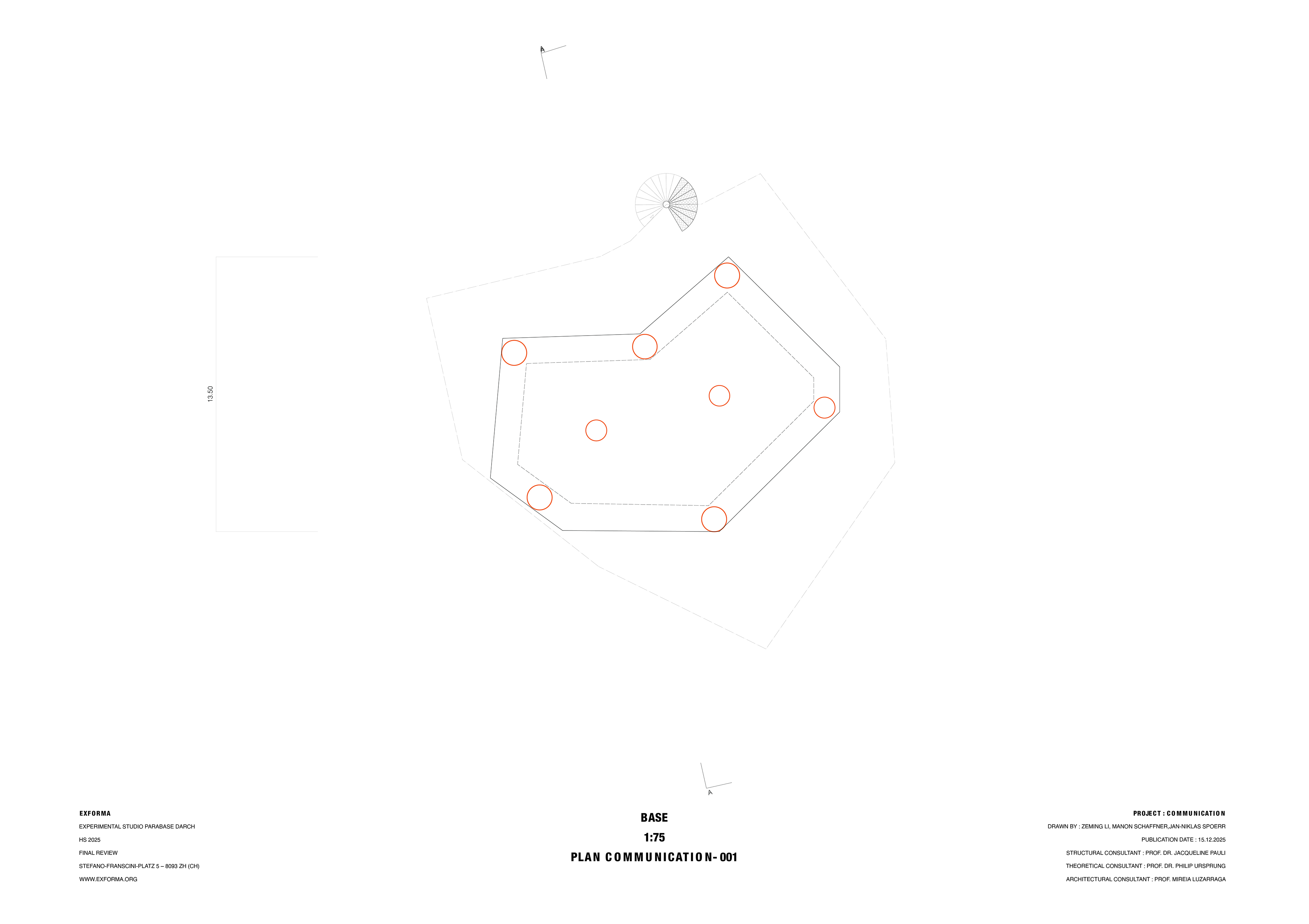
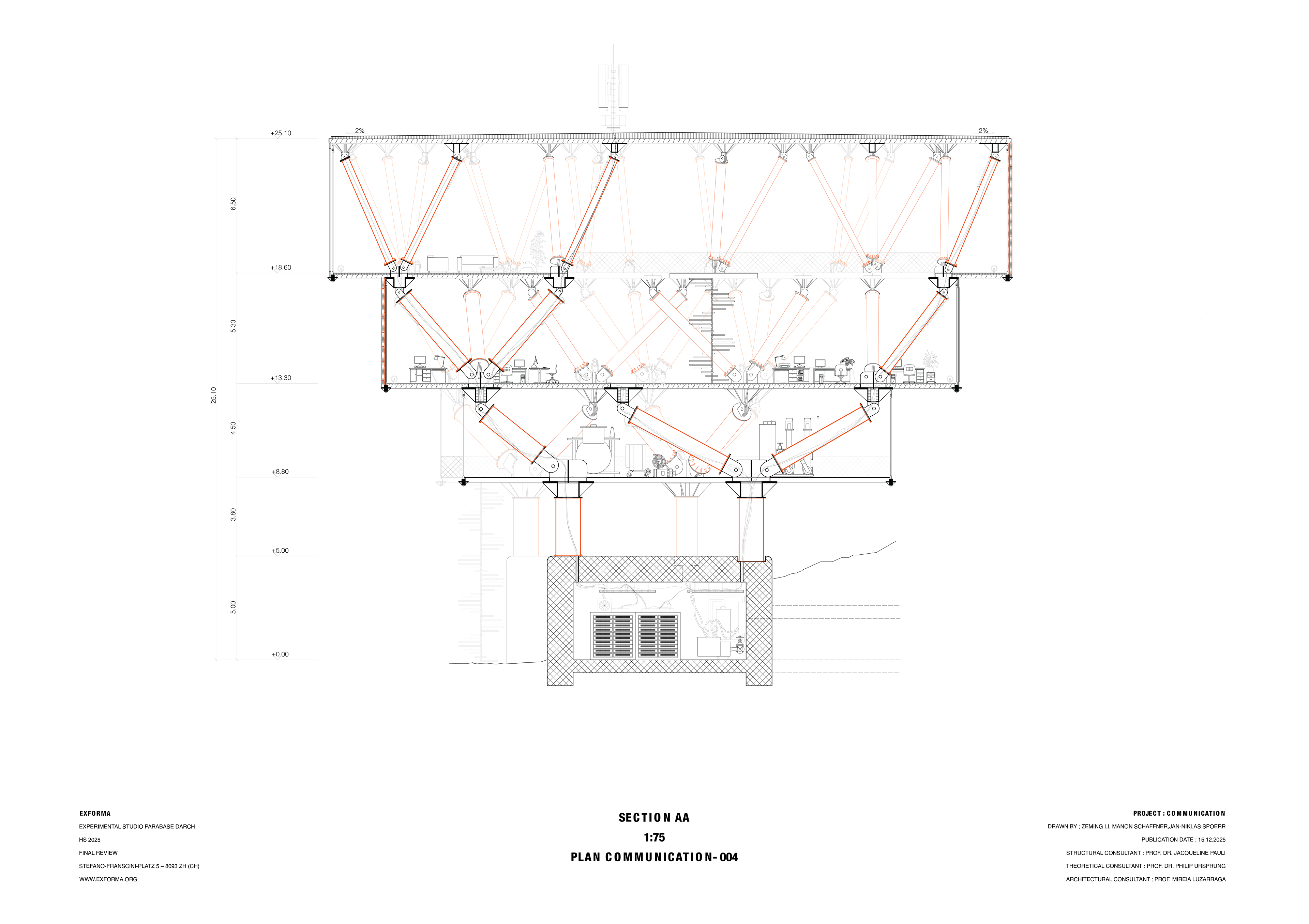
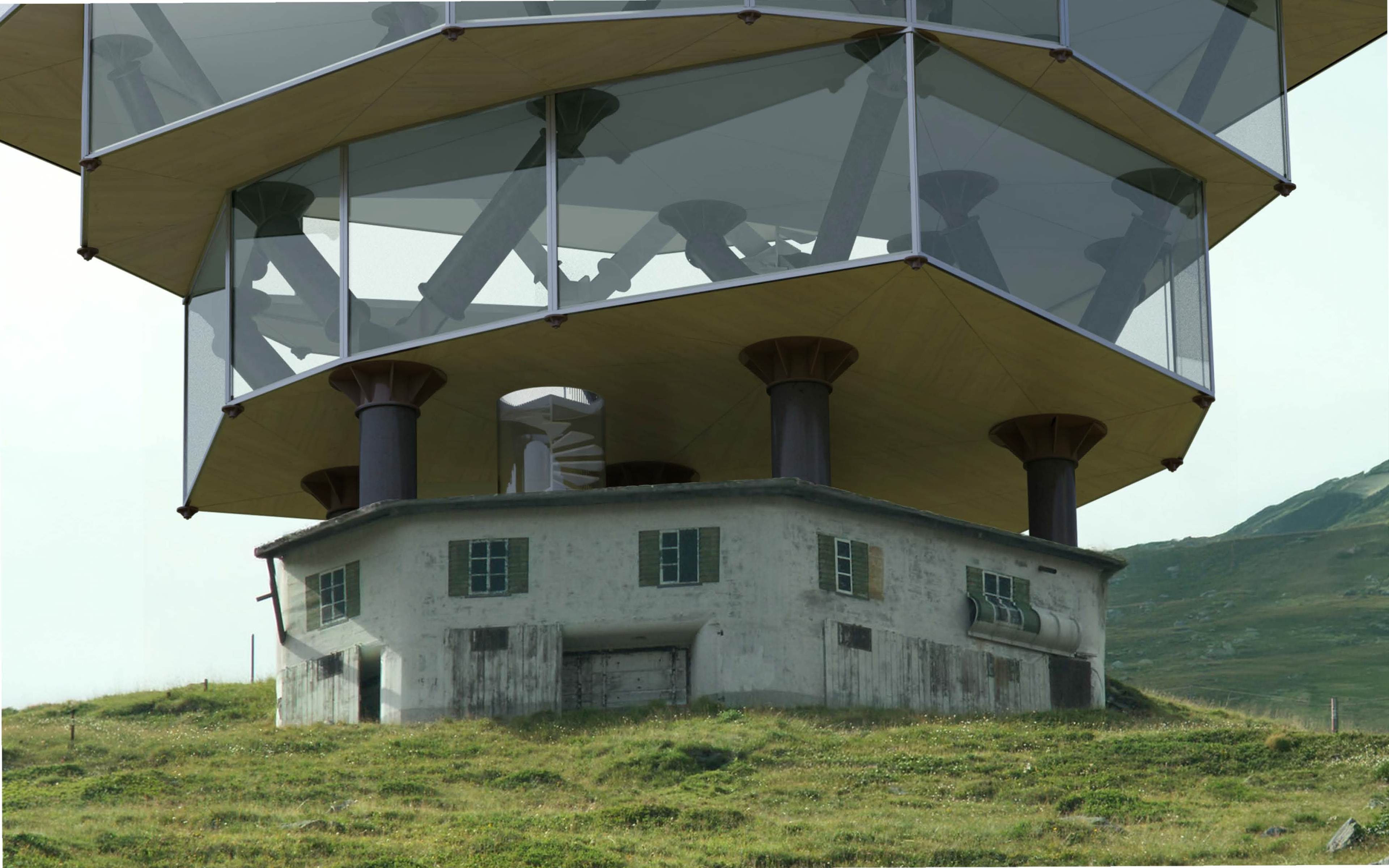
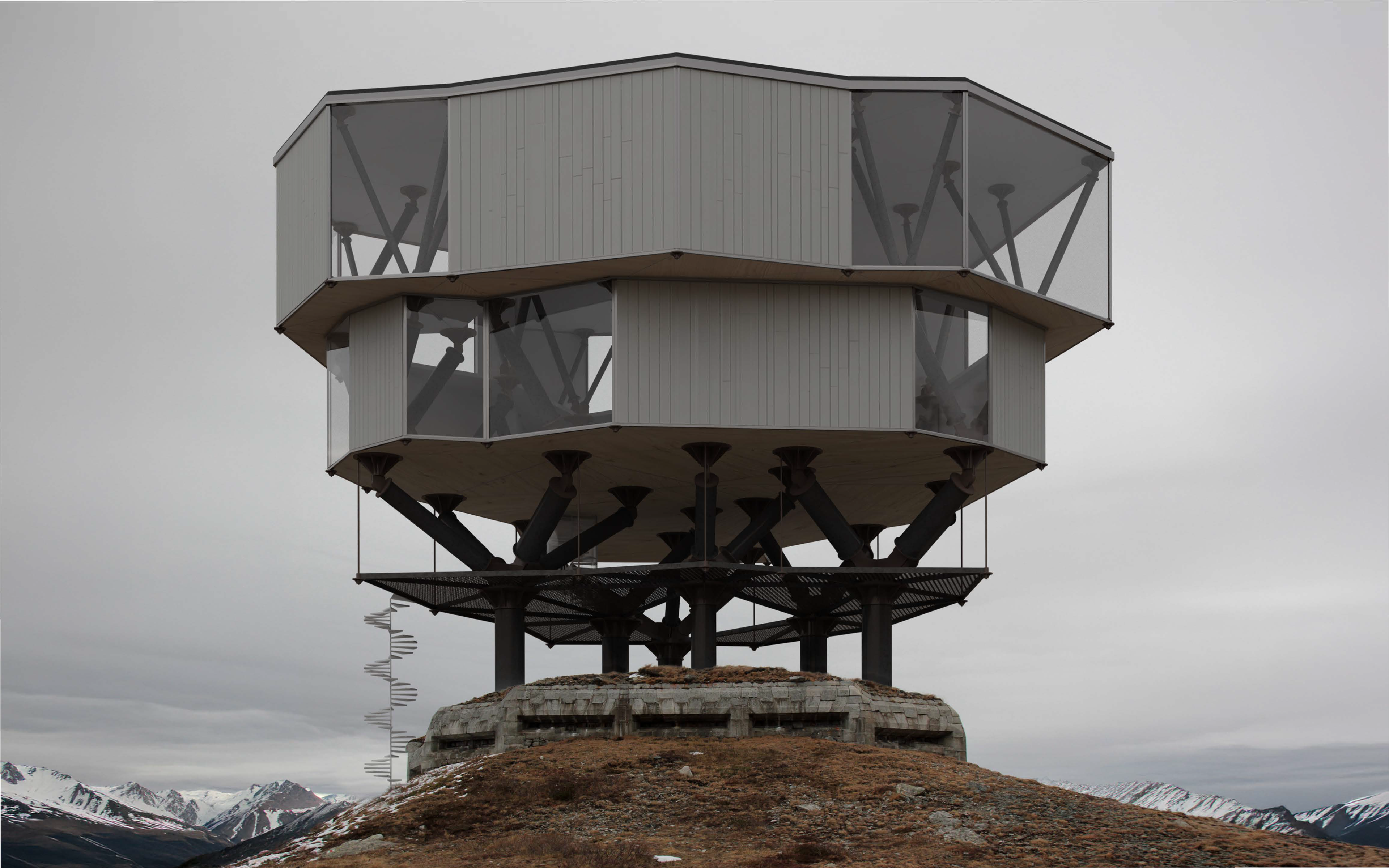
The project develops a branching structural typology. Each "tree" consists of a single vertical trunk at ground level that progressively subdivides into 1 to 4 inclined branches at successive floor levels. Multiple trees lean against one another, achieving stability through mutual compression at their crown connections.
The varying heights of salvaged monopole components are accommodated through controlled inclination: shorter members angle more steeply, longer members more gently, such that all branch tips arrive at consistent floor planes. A parametric optimization system processes the available component inventory, testing combinations to minimize angular variation while achieving target span dimensions.
This structural logic accepts the dimensional inconsistency of salvaged materials. Rather than demanding standardization, the system adapts to what exists.
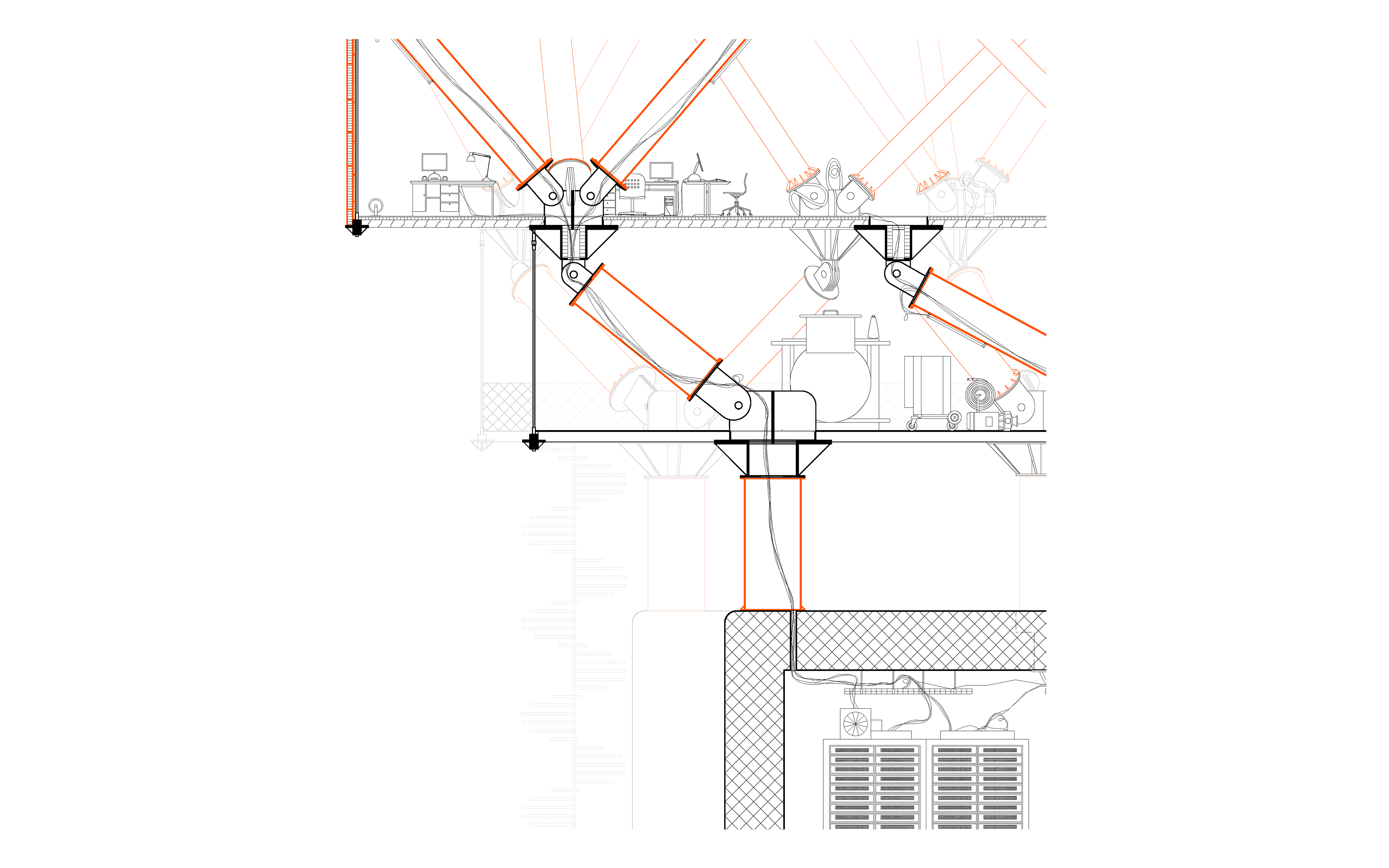
To connect components of varying diameters at controlled inclination angles while keeping connection points on consistent floor planes. The radial gussets transfer bending moments from inclined branches into the vertical trunk below, while the bolted connections allow the structure to be assembled from salvaged monopole components without welding on site.
CONNECTION: THE NODE
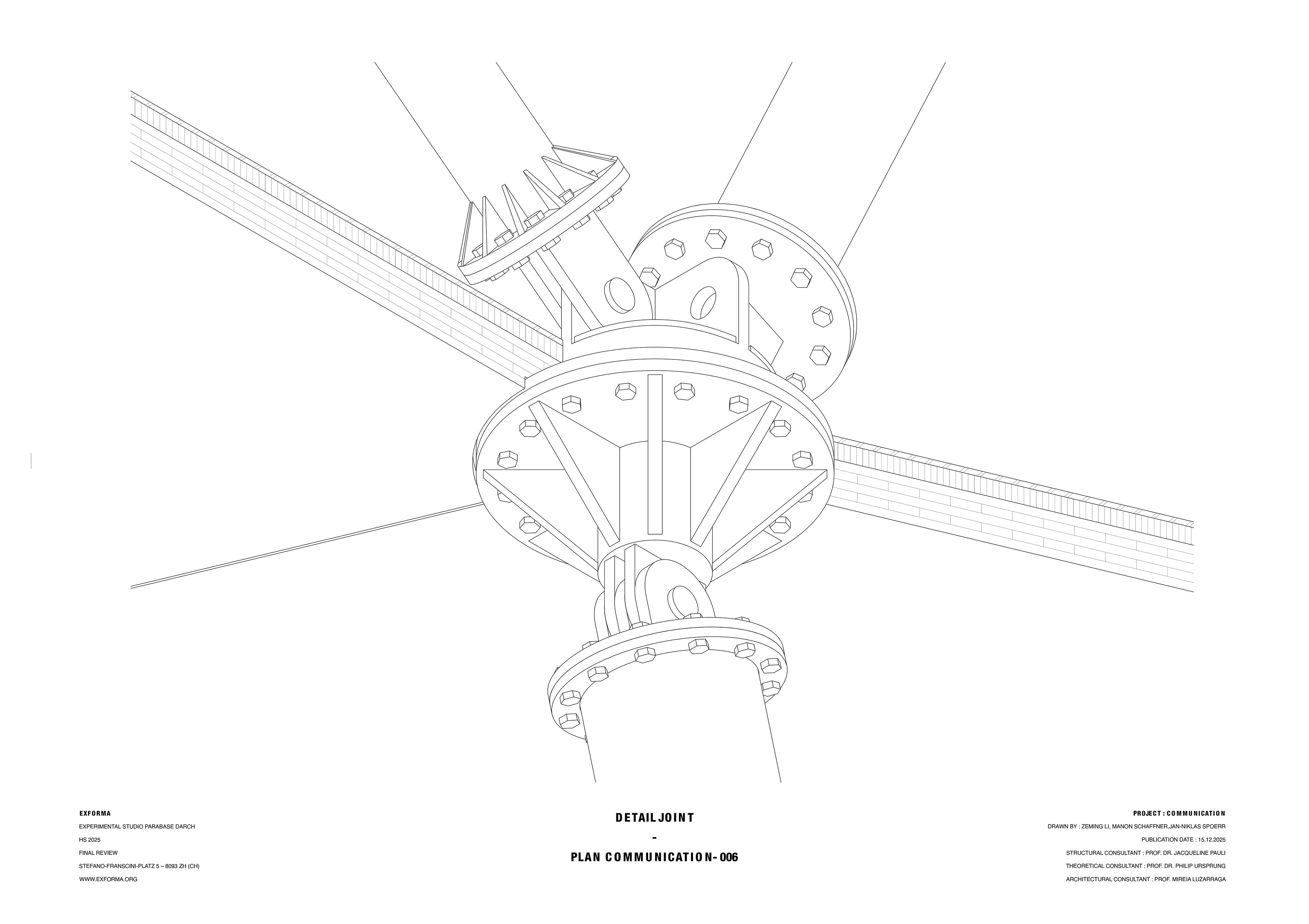
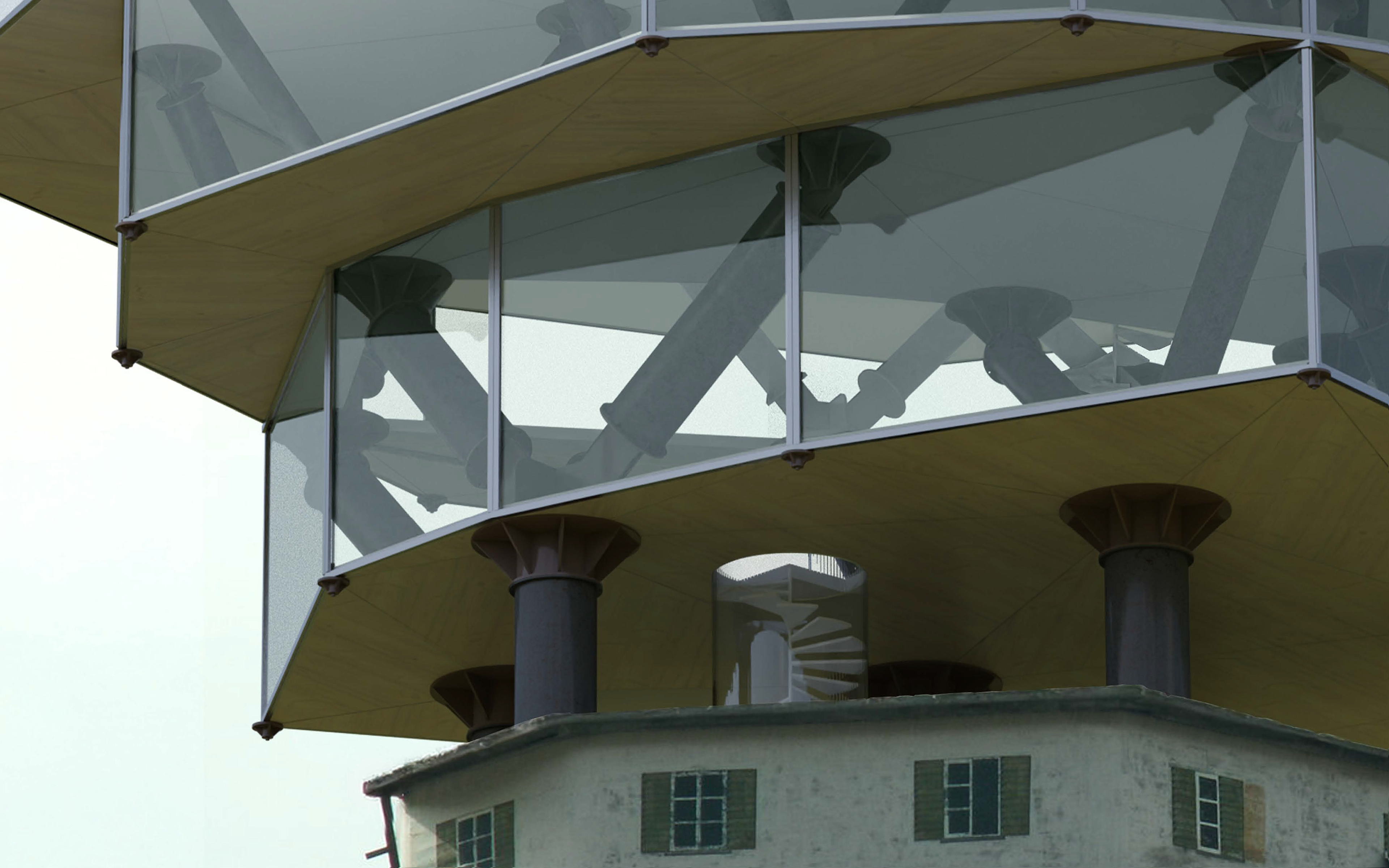
Where branches meet, custom steel nodes transfer forces between members of differing diameters and inclinations. The joint design builds upon existing flange connections standard to monopole construction: circular bolt patterns that originally stacked tower segments vertically are rotated to receive inclined members.
Each node consists of a central hub with radiating gusset plates that distribute loads. Upper connection plates accept multiple branch attachments at variable angles, while the hollow core maintains continuity for services. The bolted assembly allows structures to be erected from salvaged components without on-site welding.
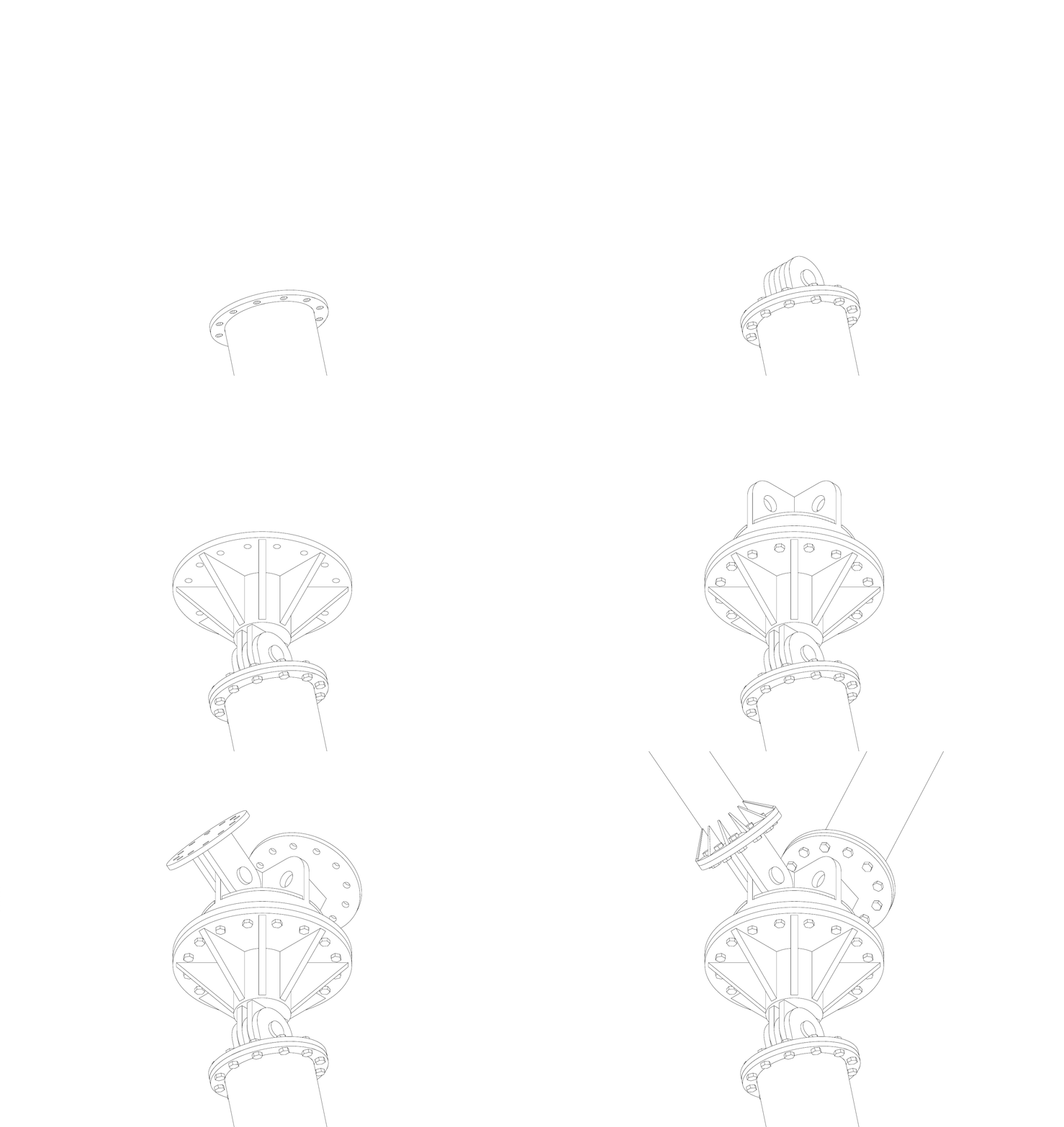
Here is how the joint works:
Central Hub Assembly:
A circular flange plate with a central opening (likely for cable/service routing through the monopole's hollow core)
Triangular gusset plates welded radially from center, providing stiffness and load transfer
Bolt holes arranged around the perimeter for connecting to the monopole tube below
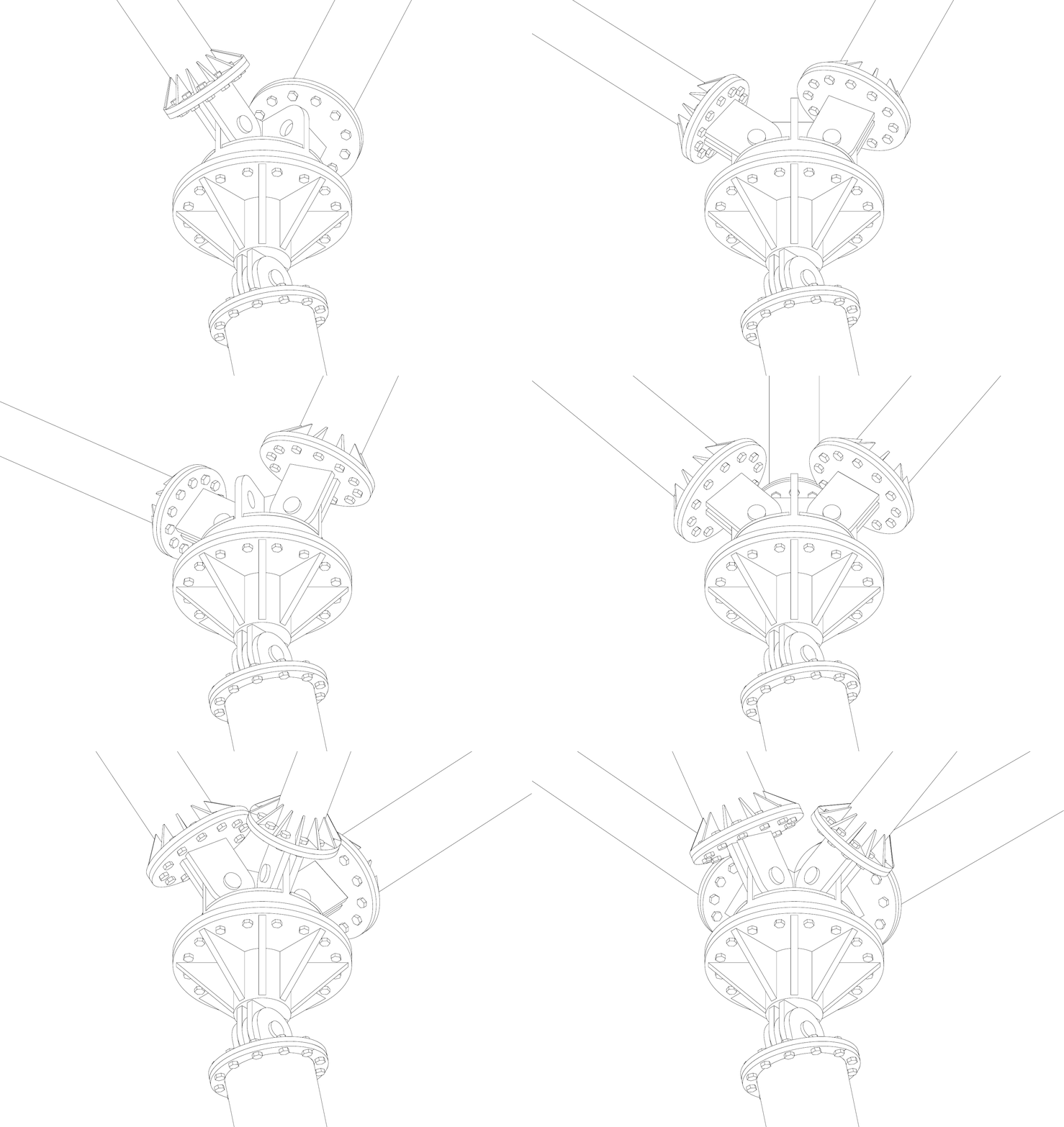
Upper Connection Plate:
A larger circular plate sitting atop the hub
Multiple bolt hole positions arranged to accept branch connections at various angles
The plate geometry allows branches to connect at inclined angles while maintaining a common connection plane
Branch Attachment Points:
Smaller flanged connections (visible on the sides) designed to receive the tapered monopole sections
These secondary flanges appear adjustable in position, allowing different branch configurations
The bolt patterns suggest standard flange-to-flange connections typical of telecommunications tower assembly
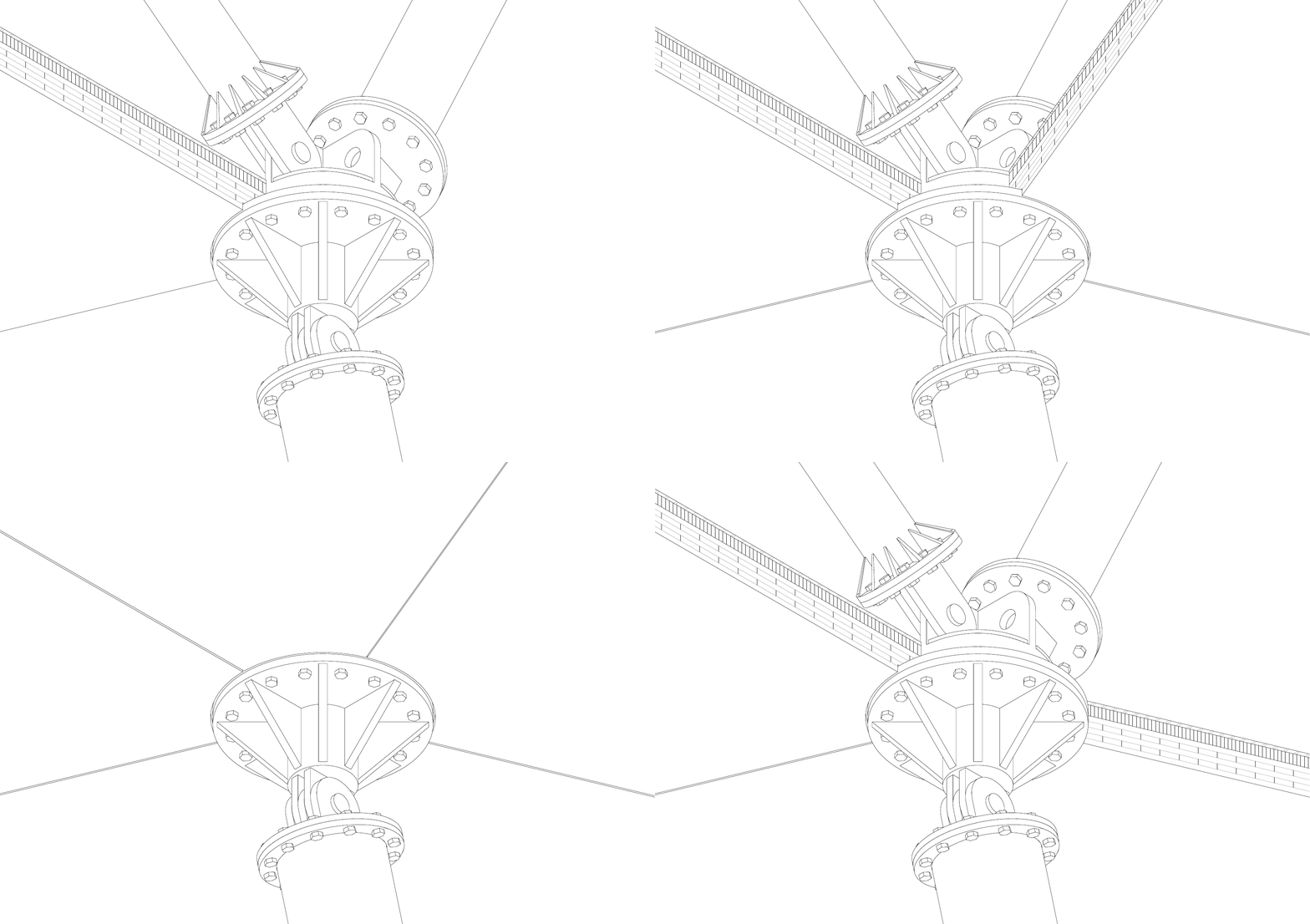
PROGRAM: DATA CENTER + WORKSPACE
The program pairs secure data storage with inhabited workspace—a hybrid responding to contemporary conditions of digital labor.
Below Grade: Data Storage
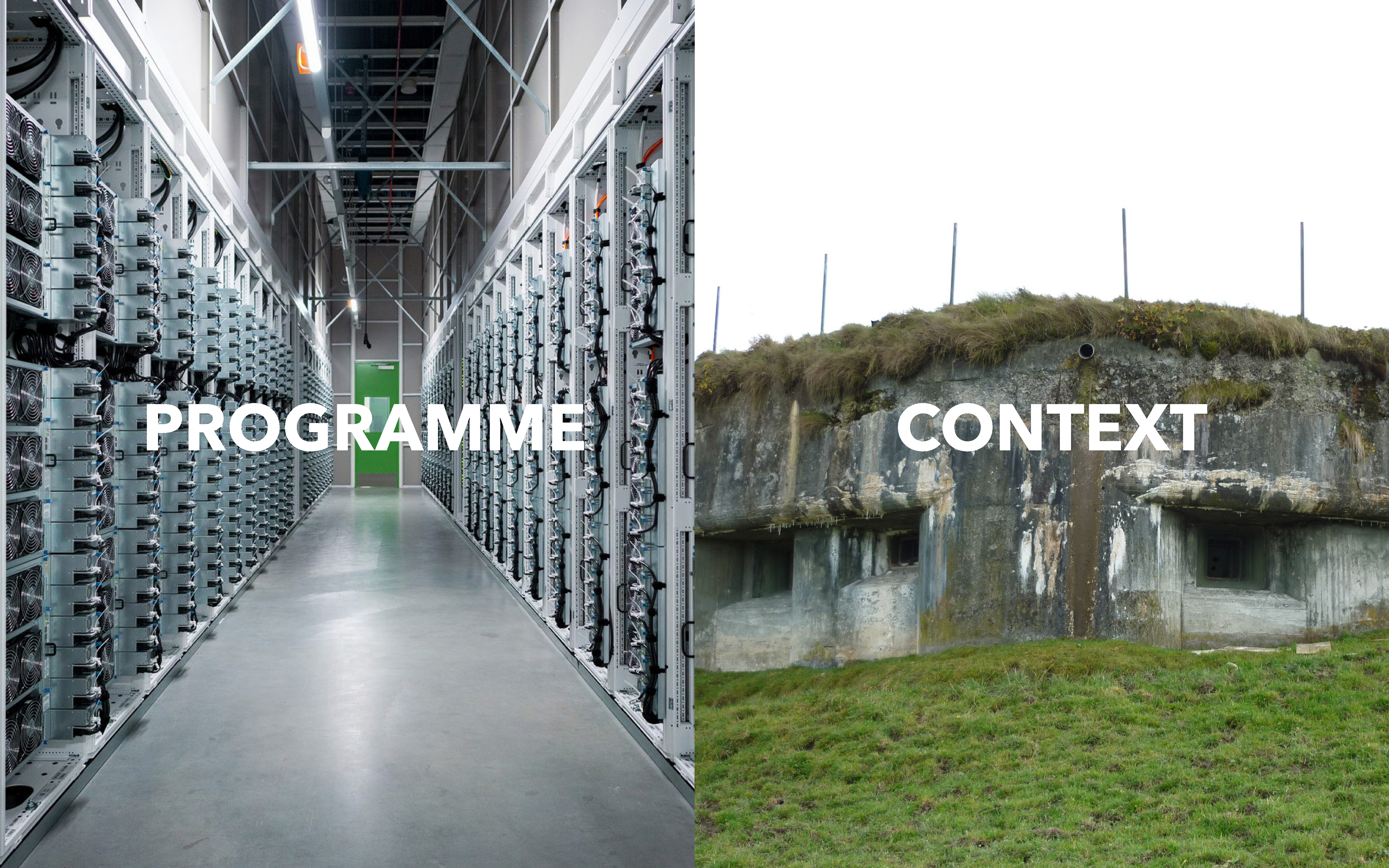
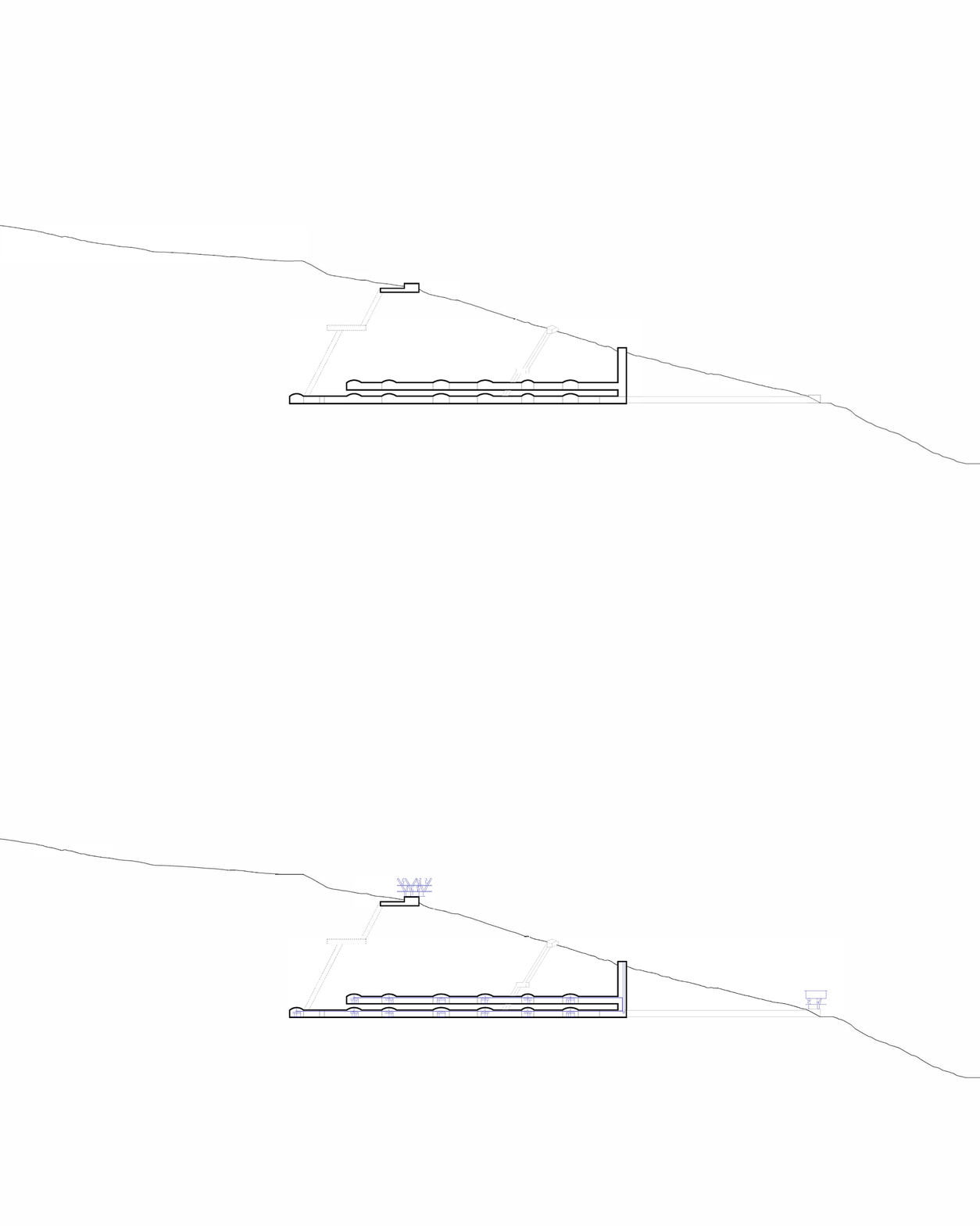
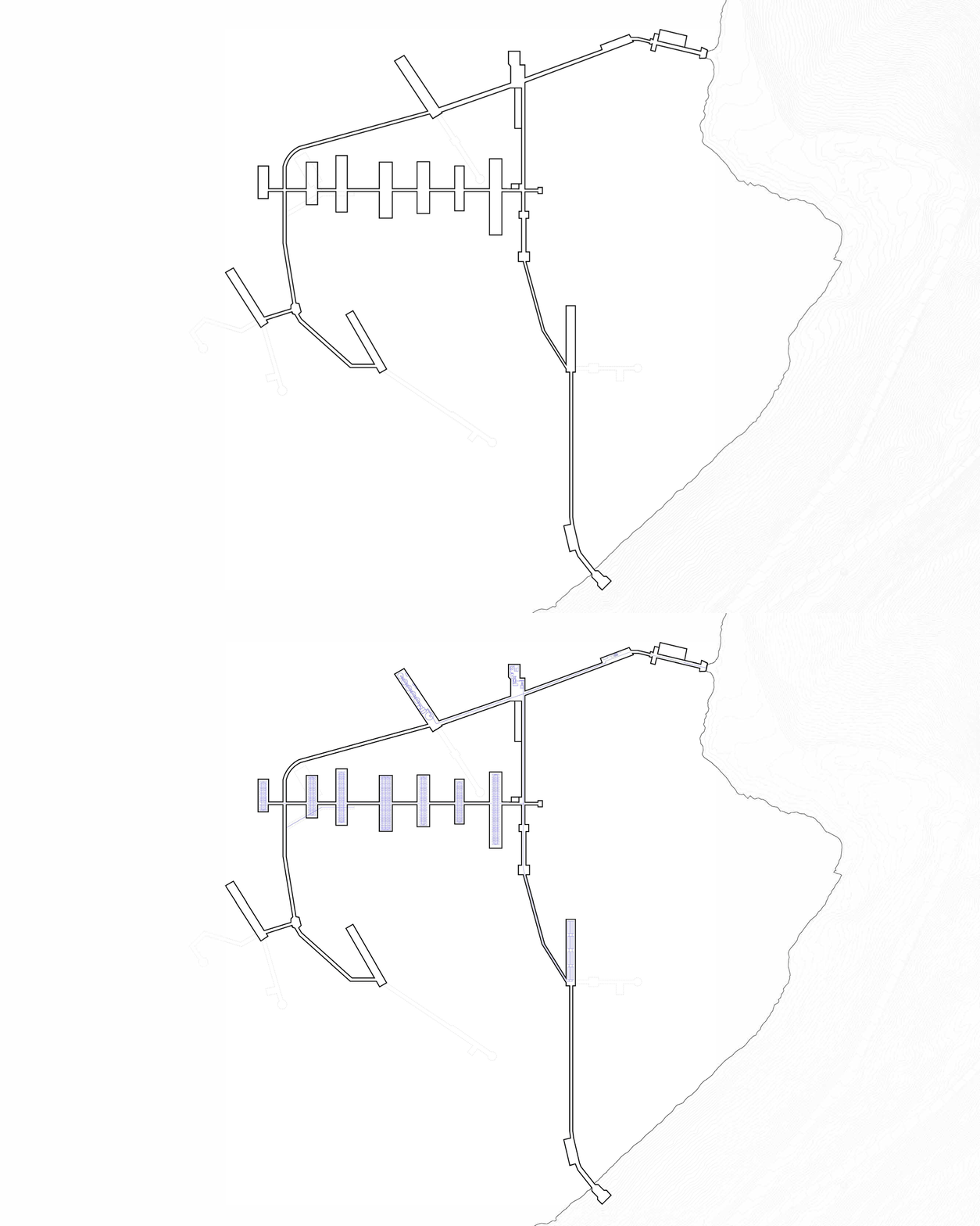
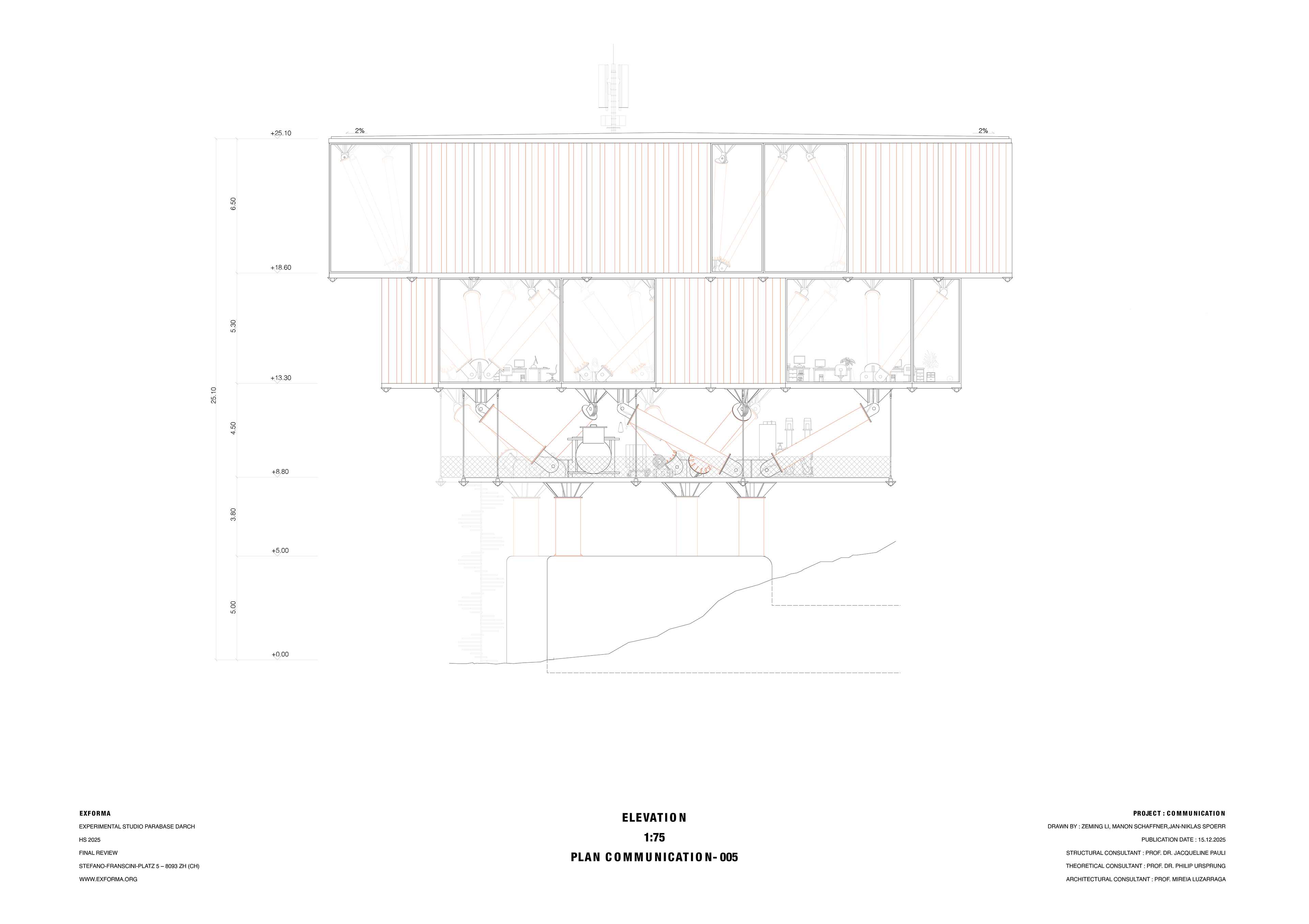
Existing bunker chambers house server halls. The original military program—ammunition storage, troop quarters, command facilities—is replaced by rows of server racks, cooling infrastructure, and power distribution systems. The thermal mass of surrounding rock and earth assists passive cooling, reducing energy demands compared to conventional above-ground facilities. Reinforced concrete construction, designed to withstand artillery bombardment, provides physical security exceeding typical data center standards. Decommissioned military systems are adapted where possible. Ventilation shafts designed for filtered air circulation serve data center cooling requirements. Emergency power systems, originally intended to maintain command operations during siege, support uninterruptible server operation. The bunker's original infrastructure—conceived for human survival in crisis—proves equally suited to machine operation in continuity.
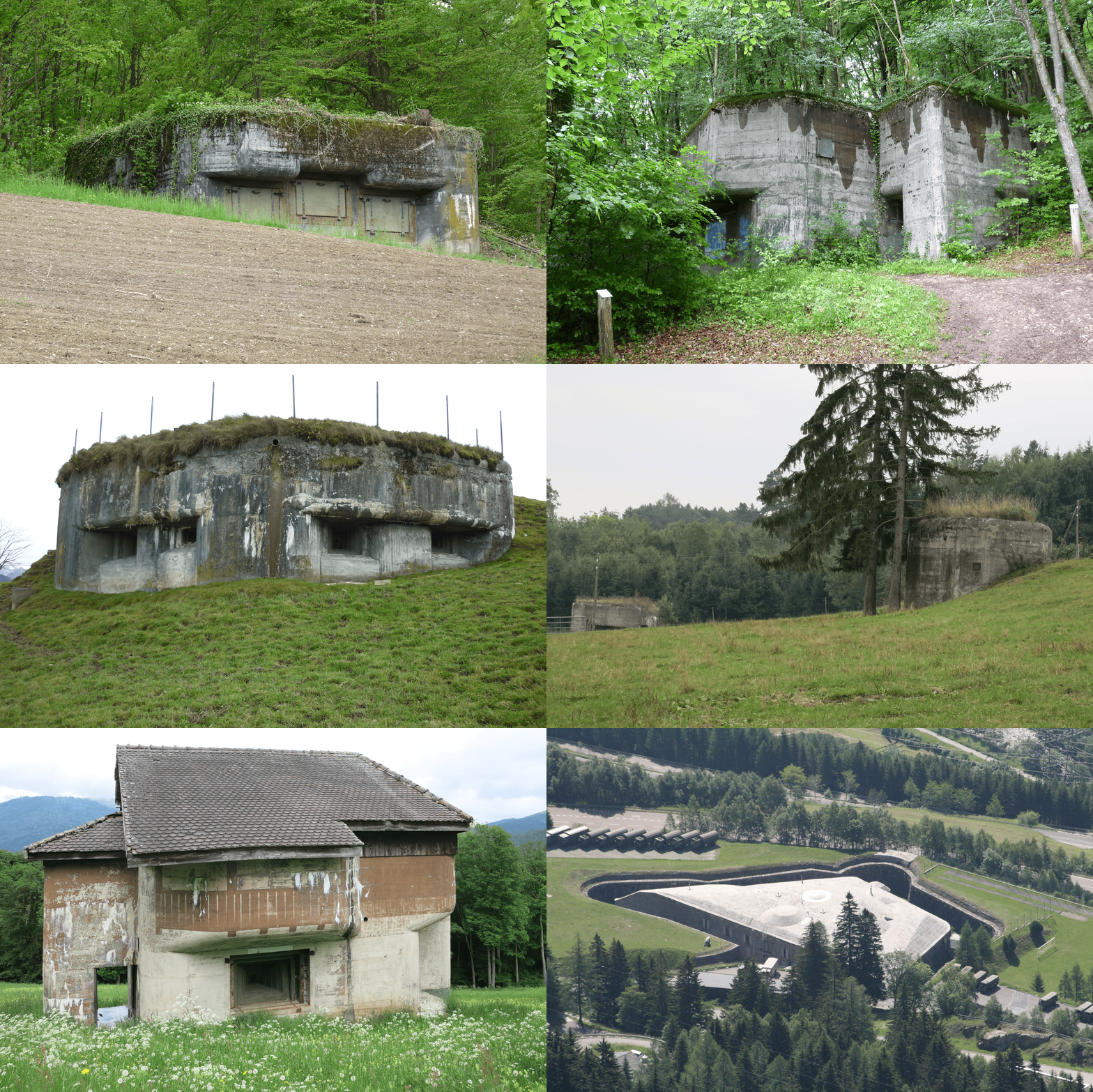
Above Grade: Workspace
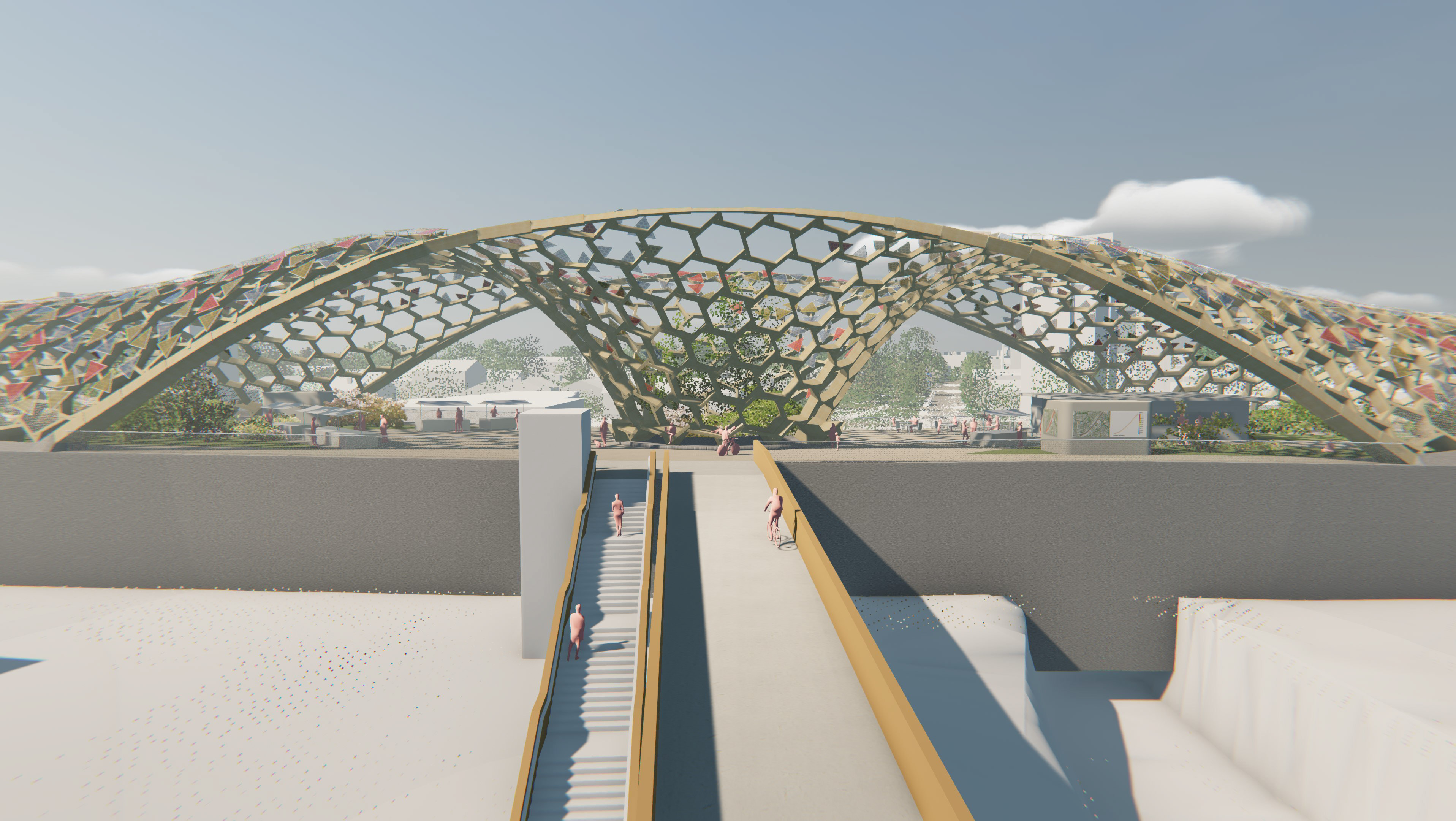
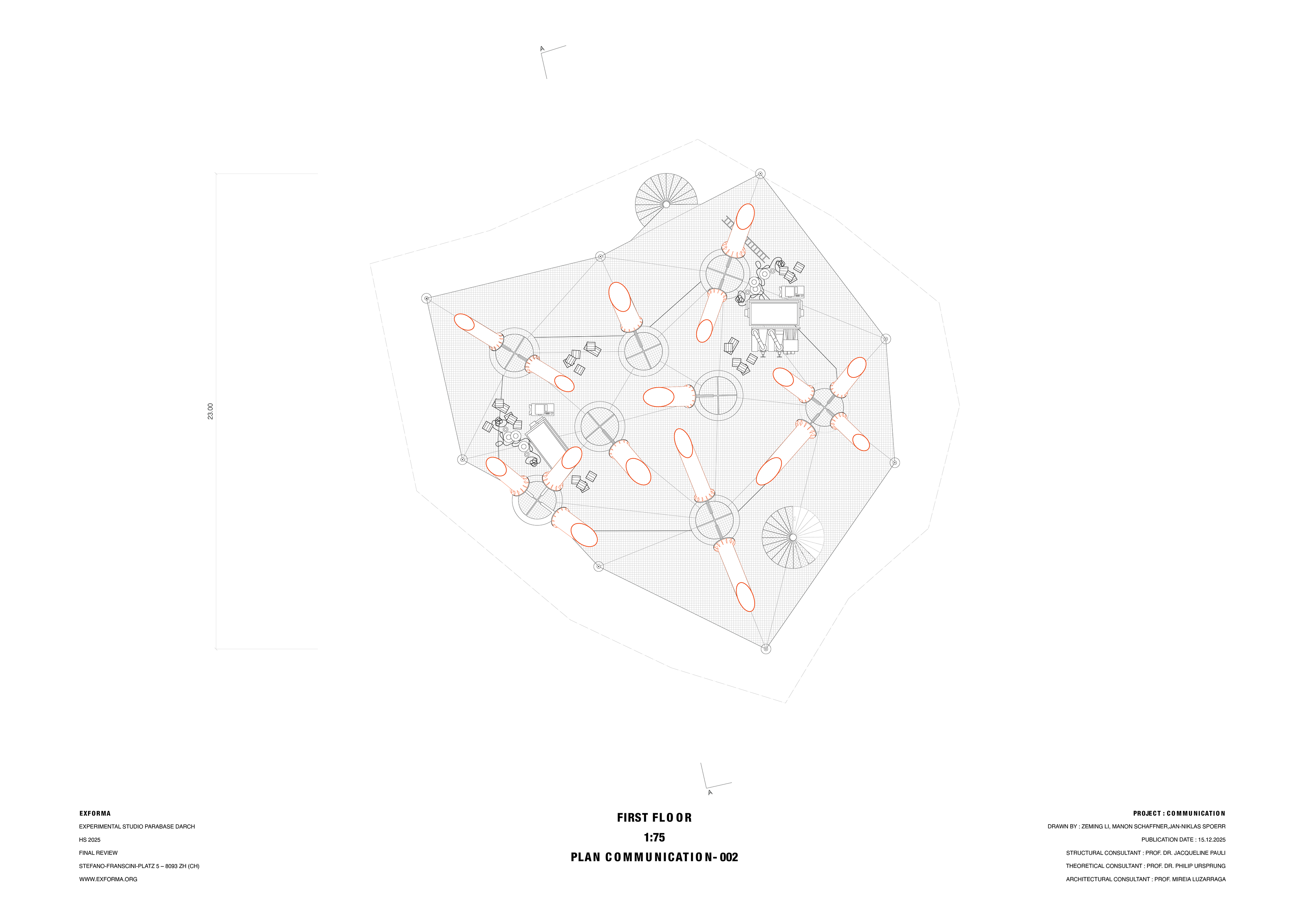
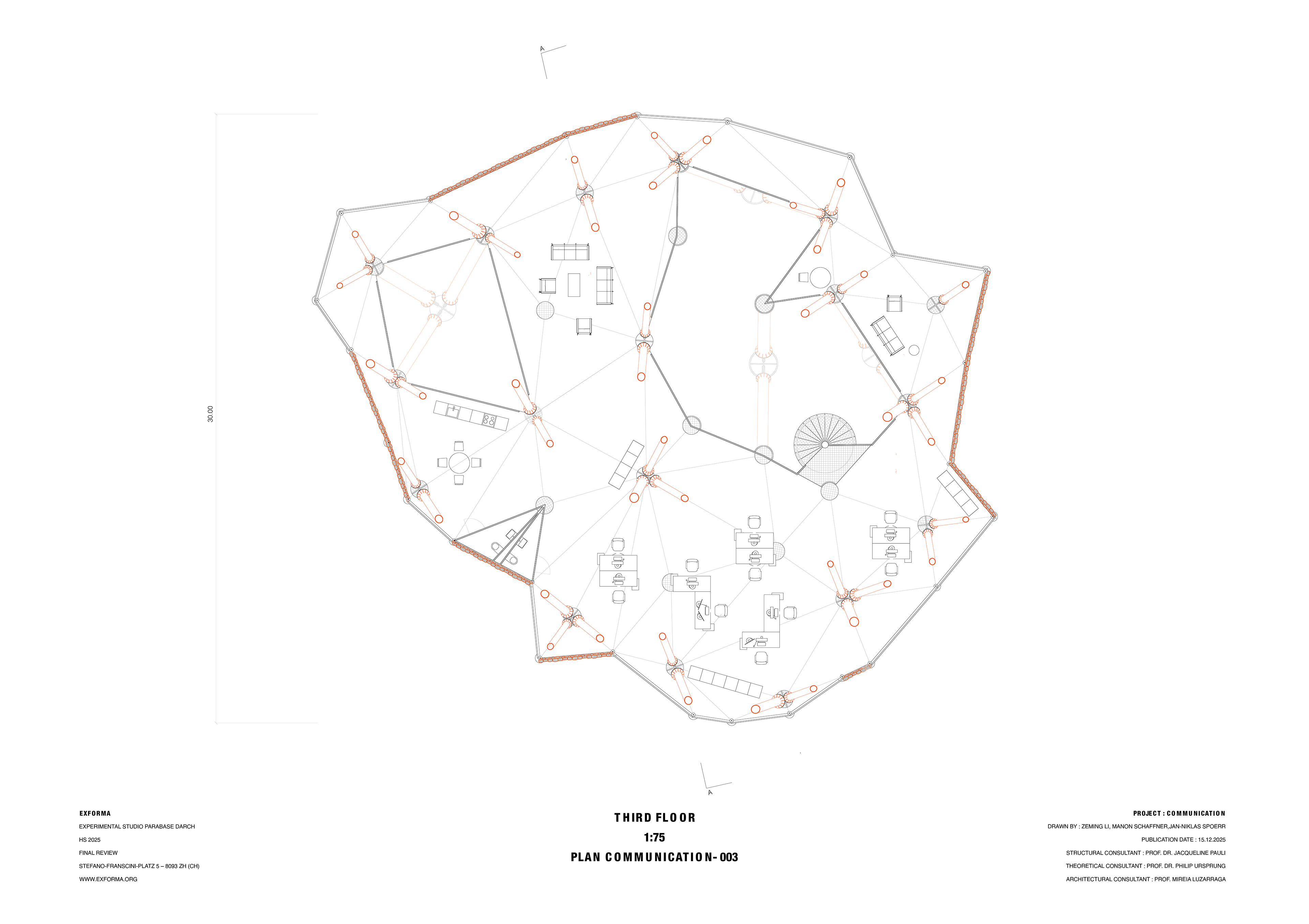
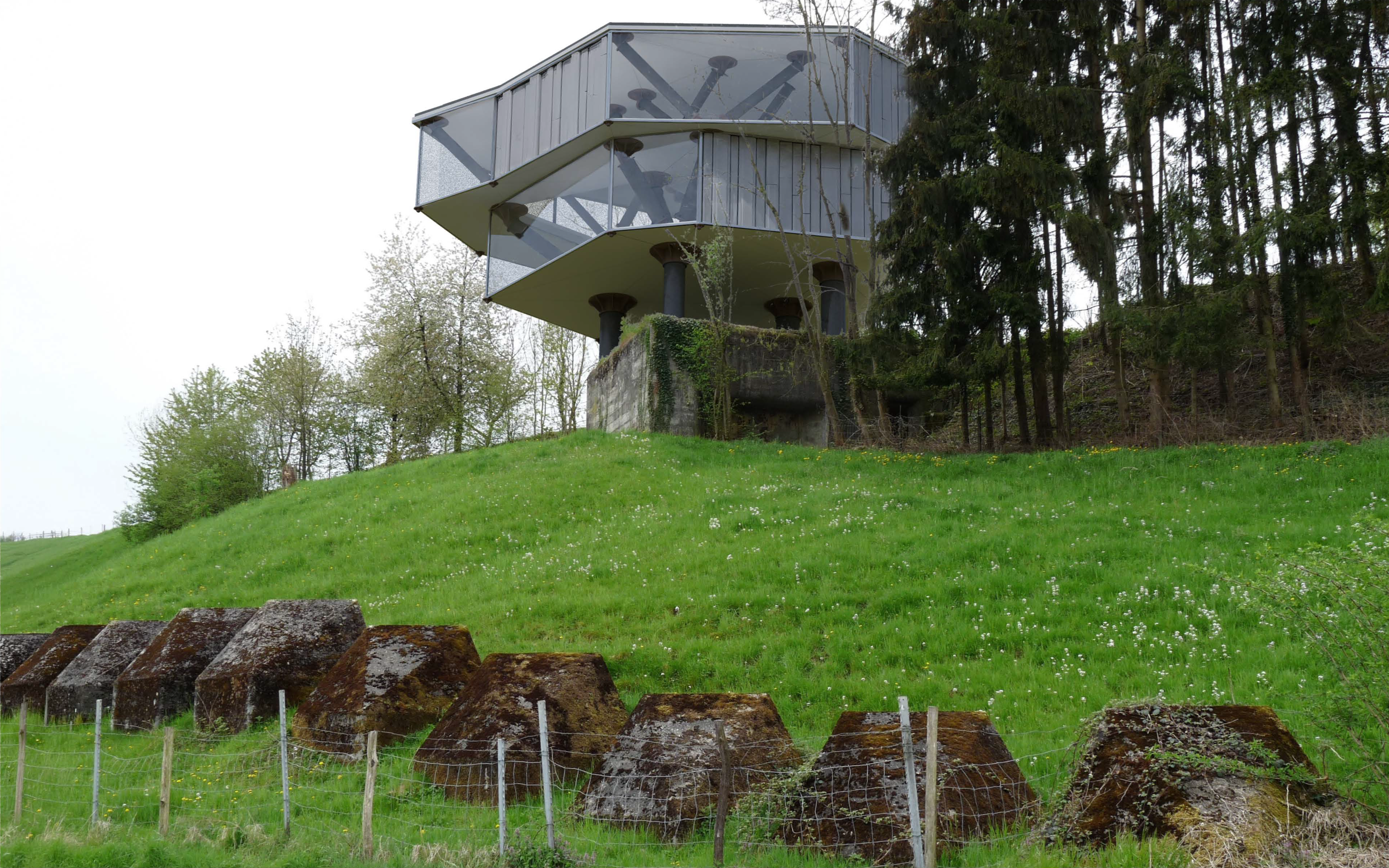
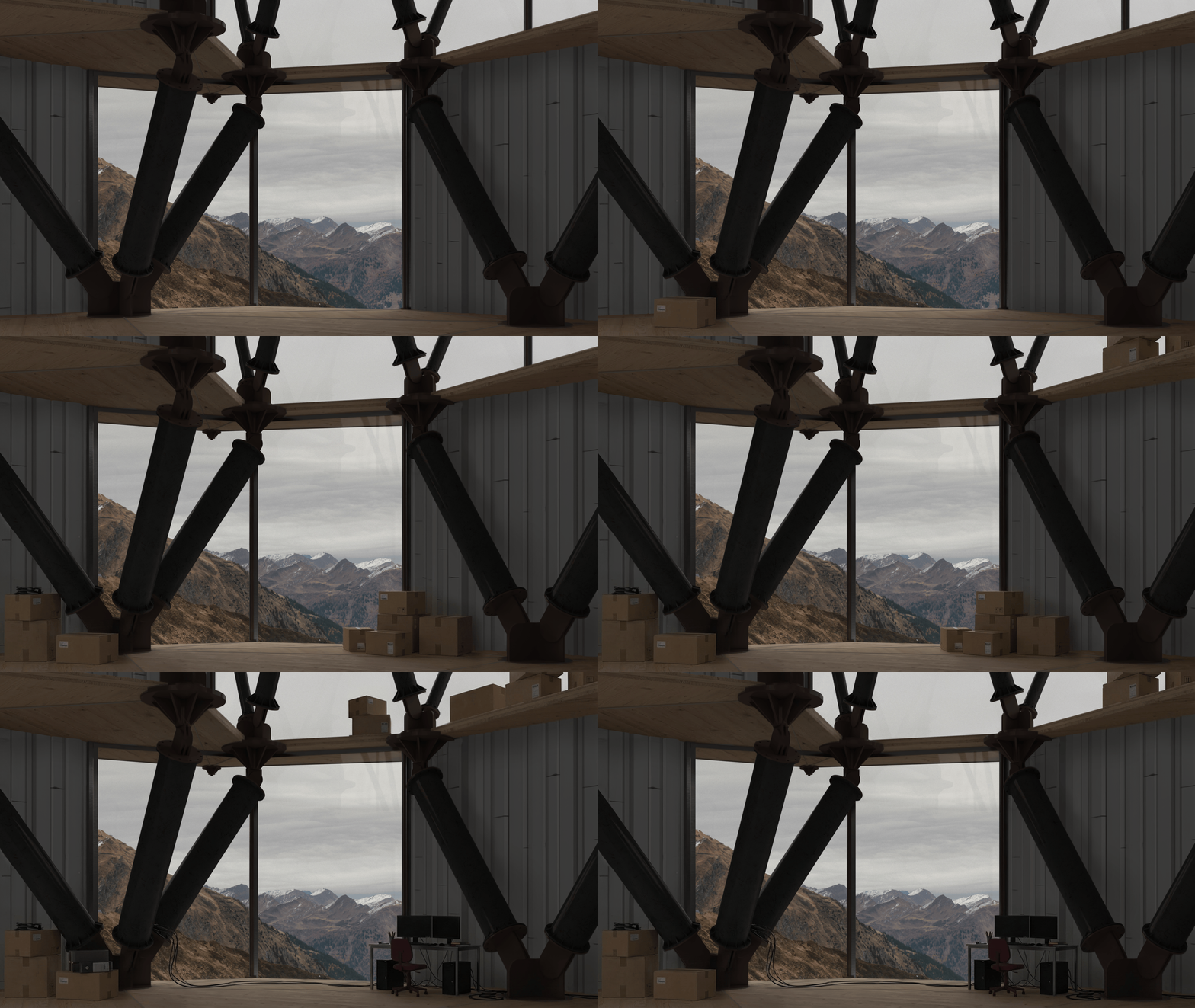
The monopole tree structures emerge from bunker access points, supporting flexible work environments above the concealed data infrastructure below. Floor plates span between branching steel members, offering open workspace within the structural canopy. The architectural expression inverts the bunker's logic of concealment: where military construction disappeared into landscape, the tree structures rise visibly above it.
This vertical pairing connects digital labor to its physical substrate. Workers occupy space literally constructed from decommissioned communication infrastructure, above servers housed in decommissioned military infrastructure. The building makes explicit what network architecture typically obscures: that cloud computing depends on actual locations, physical materials, and energy consumption.
Program distribution varies by site. Larger fortification complexes accommodate substantial server capacity with corresponding workforce facilities—offices, meeting spaces, support amenities. Smaller bunker sites function as edge nodes in a distributed network, housing minimal server infrastructure with temporary work positions for maintenance access.
Infrastructure Continuity
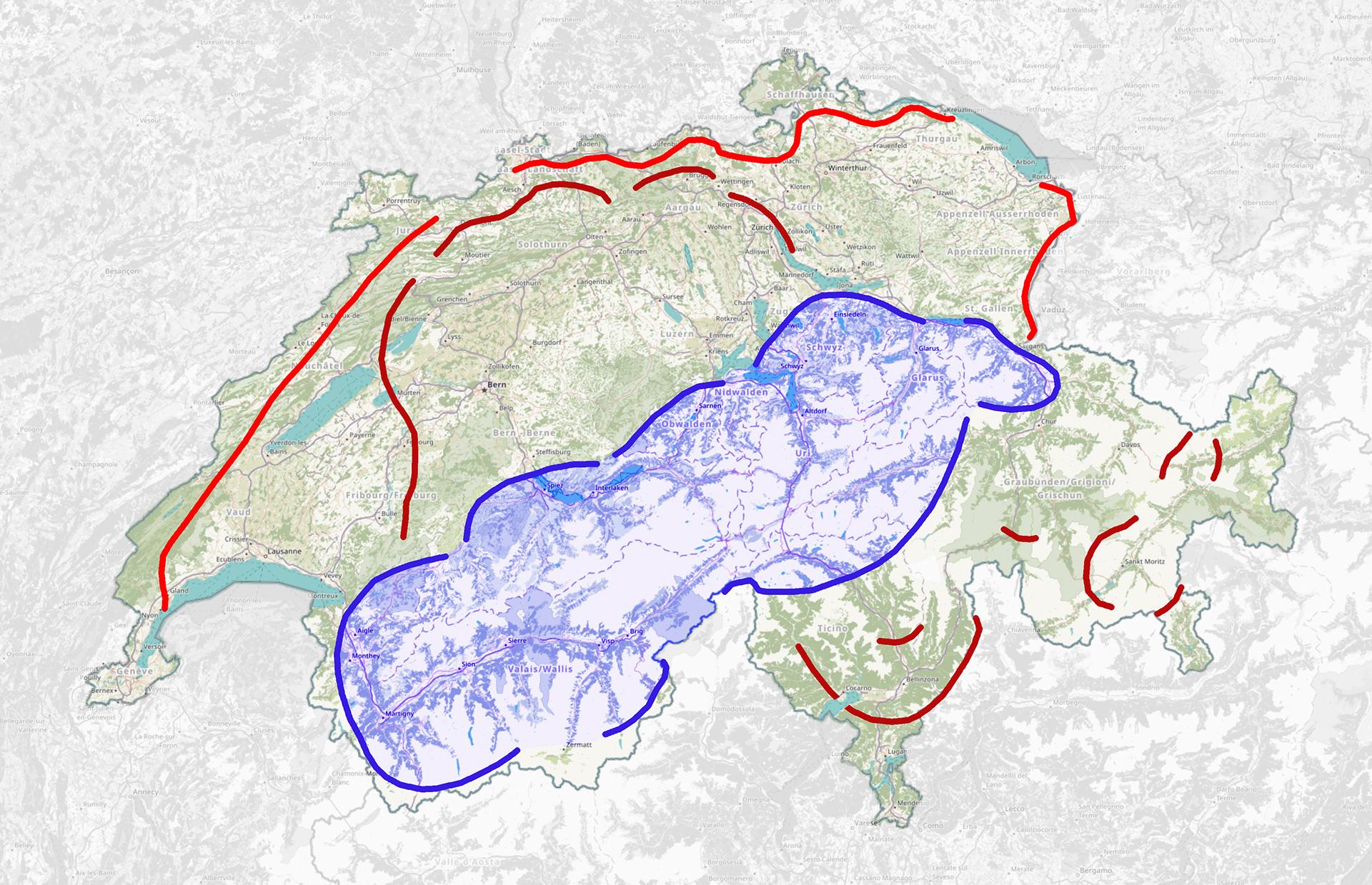
The project reads Switzerland's landscape as layered infrastructure: agricultural territory overlaid with military fortification overlaid with broadcast transmission overlaid with data networks. Each layer partially obscures the previous while depending on inherited conditions—road access, power connections, communication lines. The tree structures add another layer, one that synthesizes materials from the broadcast network with sites from the military network to support the data network.
This infrastructural continuity extends to energy systems. Many bunker sites occupy elevated positions originally chosen for strategic observation—positions equally suited for solar exposure and wind resource. The project integrates renewable energy generation, partially offsetting data center consumption while utilizing land already removed from agricultural production.
full animation of generation
documentation of prepress