Einhausung Schwammendingen
Zeming Li, Jintao Yang
Immersive Studio Prof. Fabio Gramazio & Prof. Matthias Kohler
ETH, Zürich
Spring Semester 2023
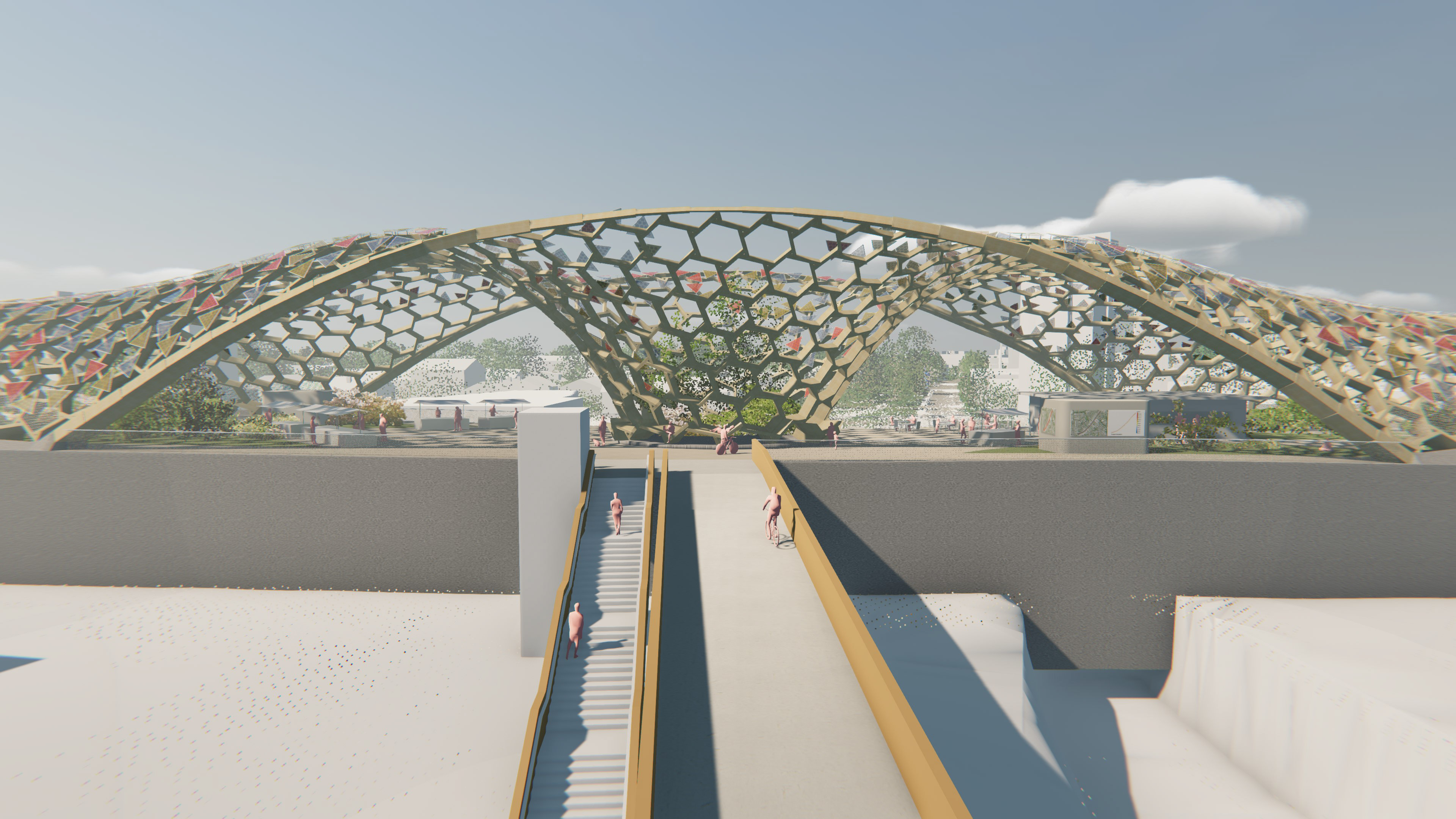
Building Site
The Einhausung Schwamendingen project is located in the Schwamendingen district, which is situated in the northern part of Zurich, Switzerland. The district is bordered by the Glatt River to the east and is primarily characterized by its proximity to major transportation routes. The project specifically focuses on the area where the A1 motorway and a busy main road intersect in Schwamendingen. The exact location of the project spans the section of these roads that pass through the district, aiming to cover and enclose them to reduce noise and improve the living conditions for the residents in the immediate vicinity.
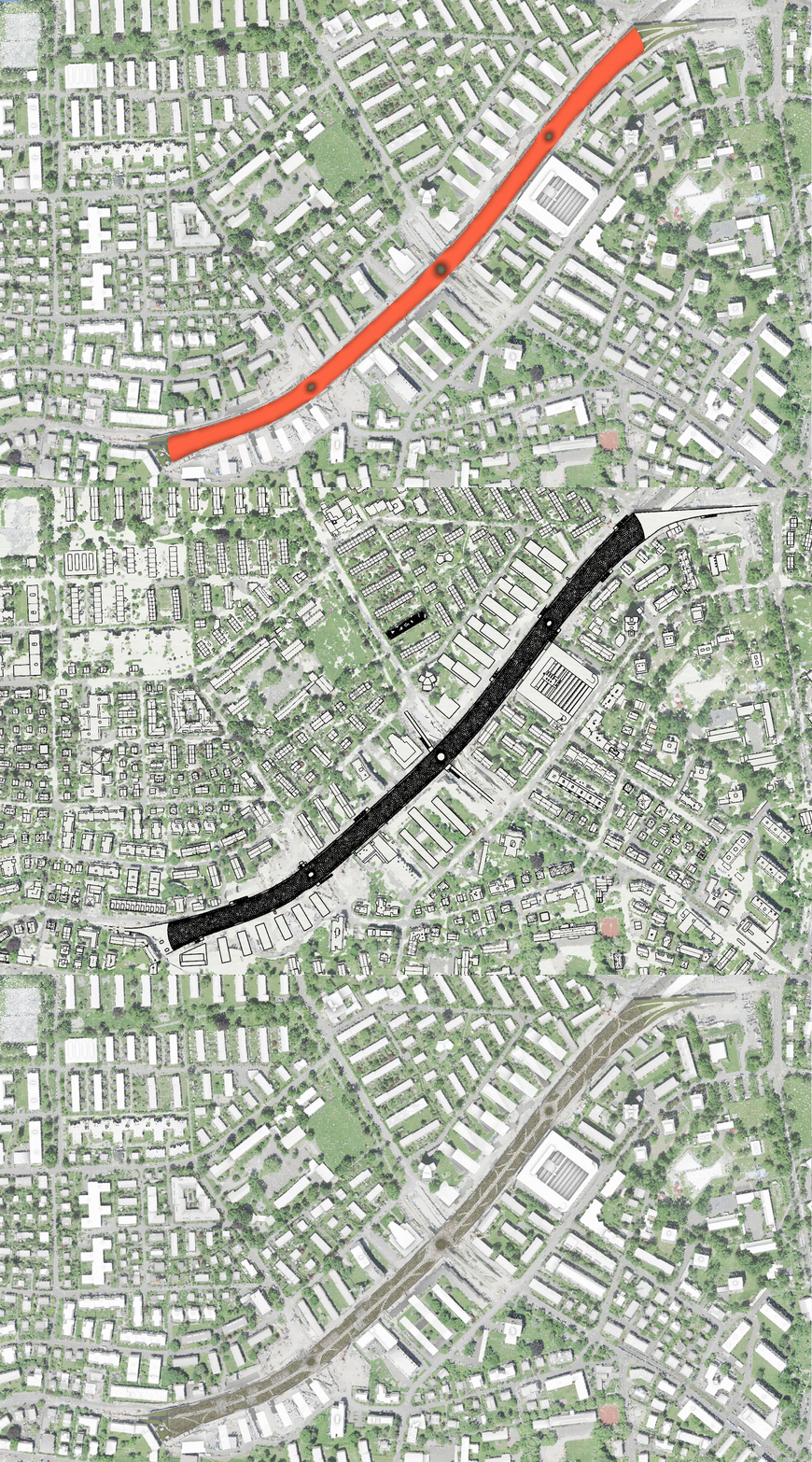
Task
With the enclosure of the highway section in Zurich Schwamendingen, an elevated park landscape will be created in the middle of Zurich's "garden city" in the next few years. It is still difficult to foresee what will really happen there in the future. There is talk of a new "highline in Zurich," for example, but the situation is not comparable to the dense urban context of the original in Manhattan. What significance this project will have for the neighborhood in the future will only become clear in the coming decades.
This semester, we want to design a second level of use for the enclosure above the park that will enter into a dialogue with the existing landscape architecture project by Krebs and Herde. An integral part of this design will be a large-scale PV system supported by a wood pole structure.
In the timber construction industry, digital joinery of complex individual parts is already standard. In order to exploit the resulting potential, we have to approach the design parametrically. This changes the rules of the game by which we plan architecture. Like every new tool, the digital also expands the space of possibilities in which we can move in terms of design.
Concept
The project is targeted to bring diverse functions and spaces to the enclosure Schwammdingen and consequently the revitalization of the nearby zones.
The volumetric concept starts from a simple full ceiling of the enclosure, followed by precise and fine works to give the continuous mega-volume the urban qualities and the varied spaces.
The volumetric concept starts from a simple full ceiling of the enclosure, followed by precise and fine works to give the continuous mega-volume the urban qualities and the varied spaces.
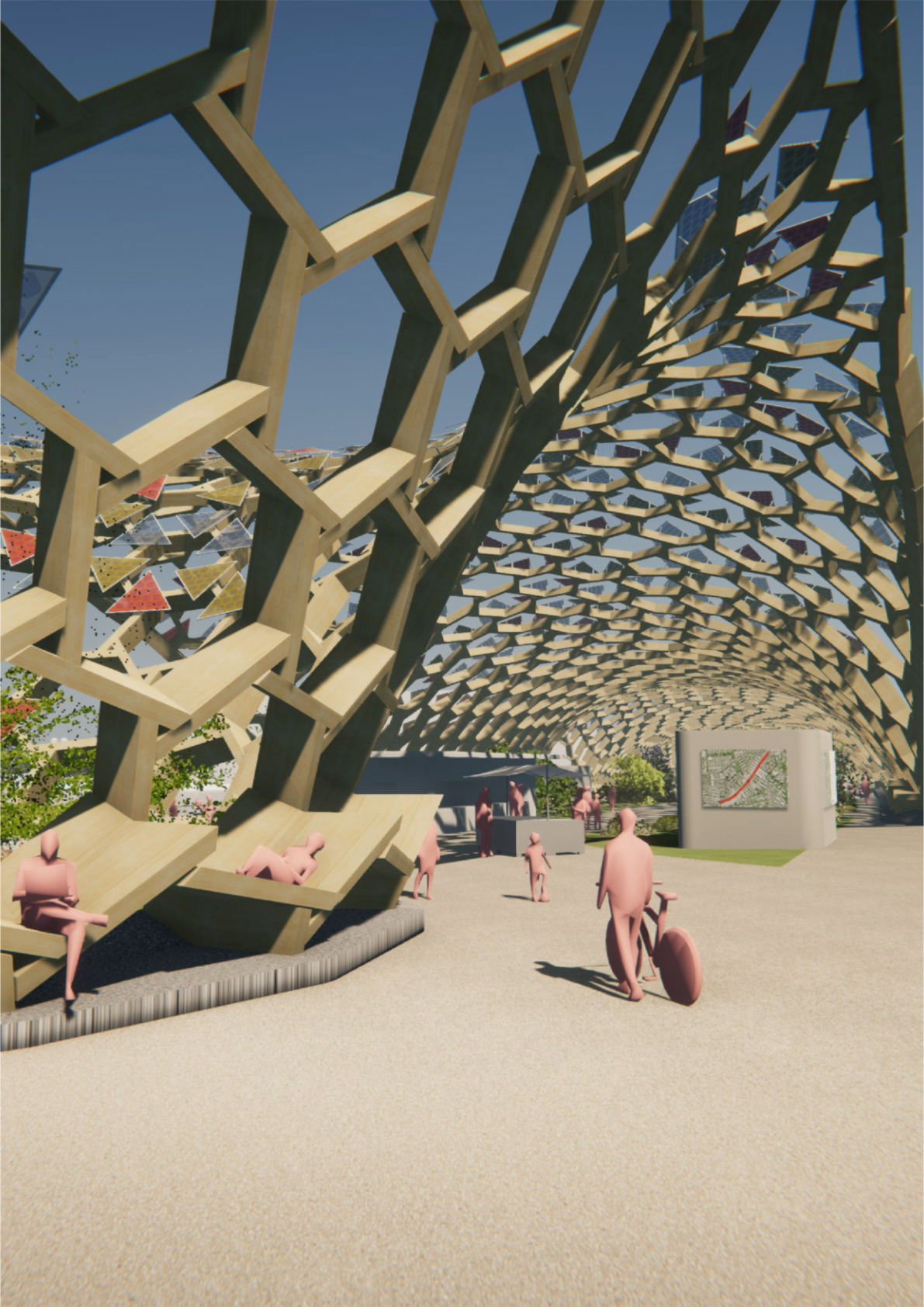
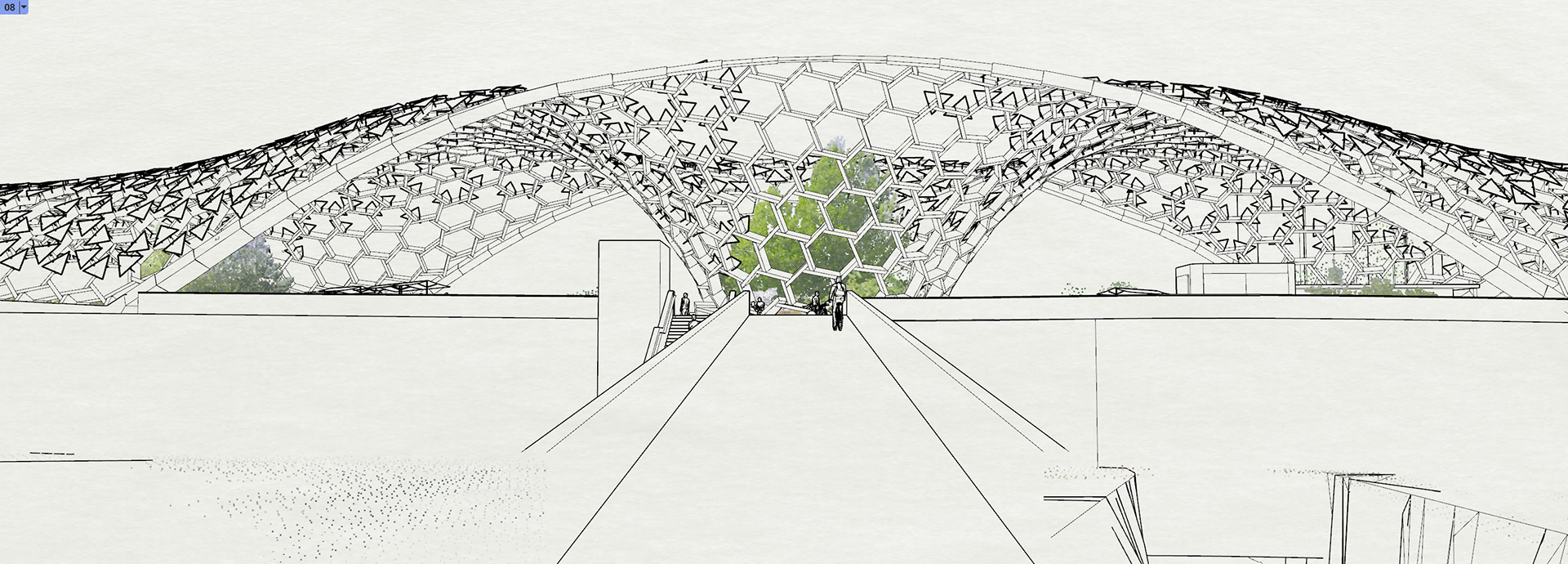
In total, there are two upper strategies to it - "hole" on the facade and "mushroom" in the middle. Accordingly, they can each be subdivided into several variants to respond to different urban contexts.
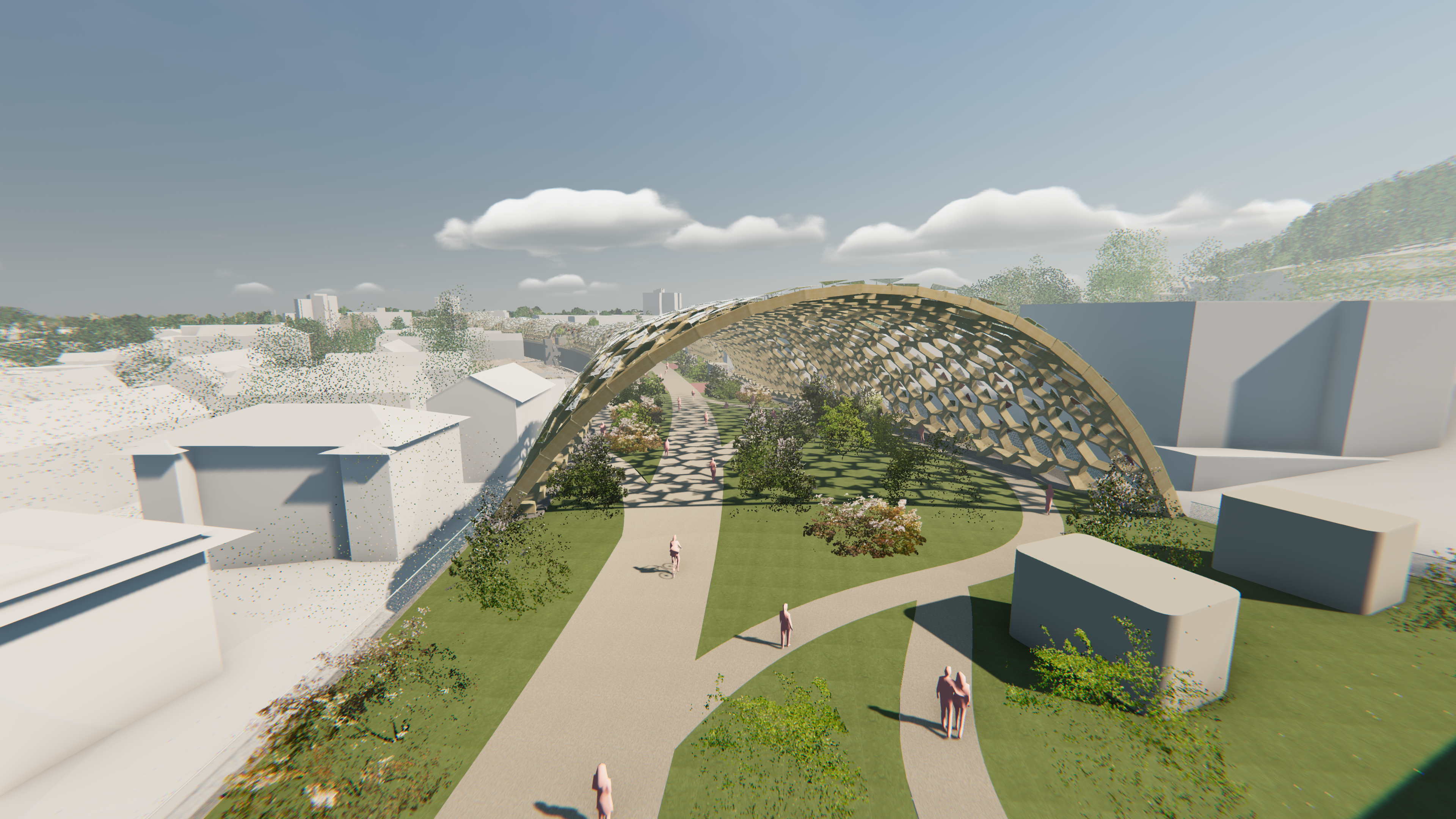
In the "mushroom" strategy, there is a large central mushroom that serves as the primary traffic intersection and the symbol of the project. Two smaller mushrooms stand on one side each. They make up the secondary lateral hub.
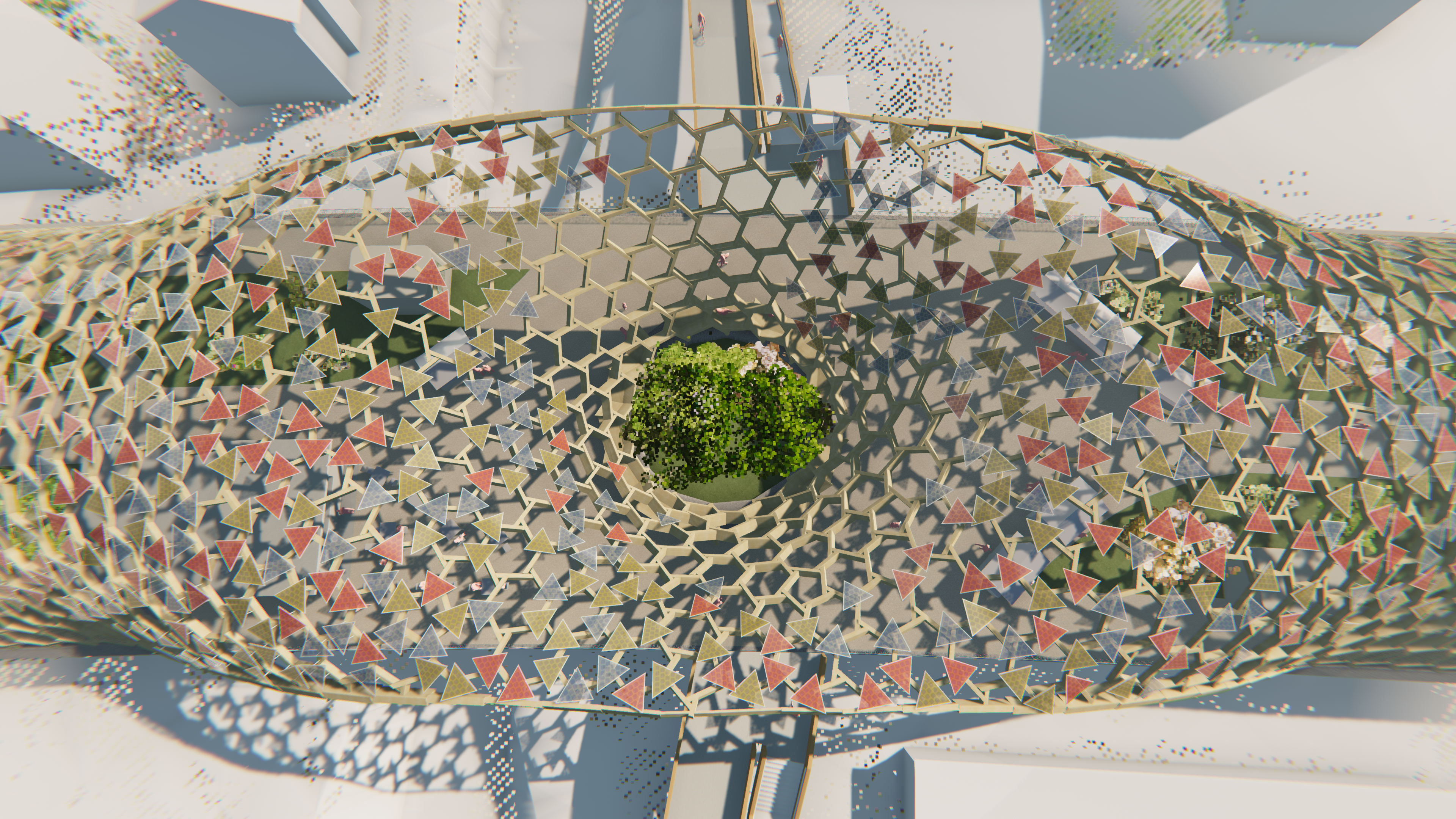
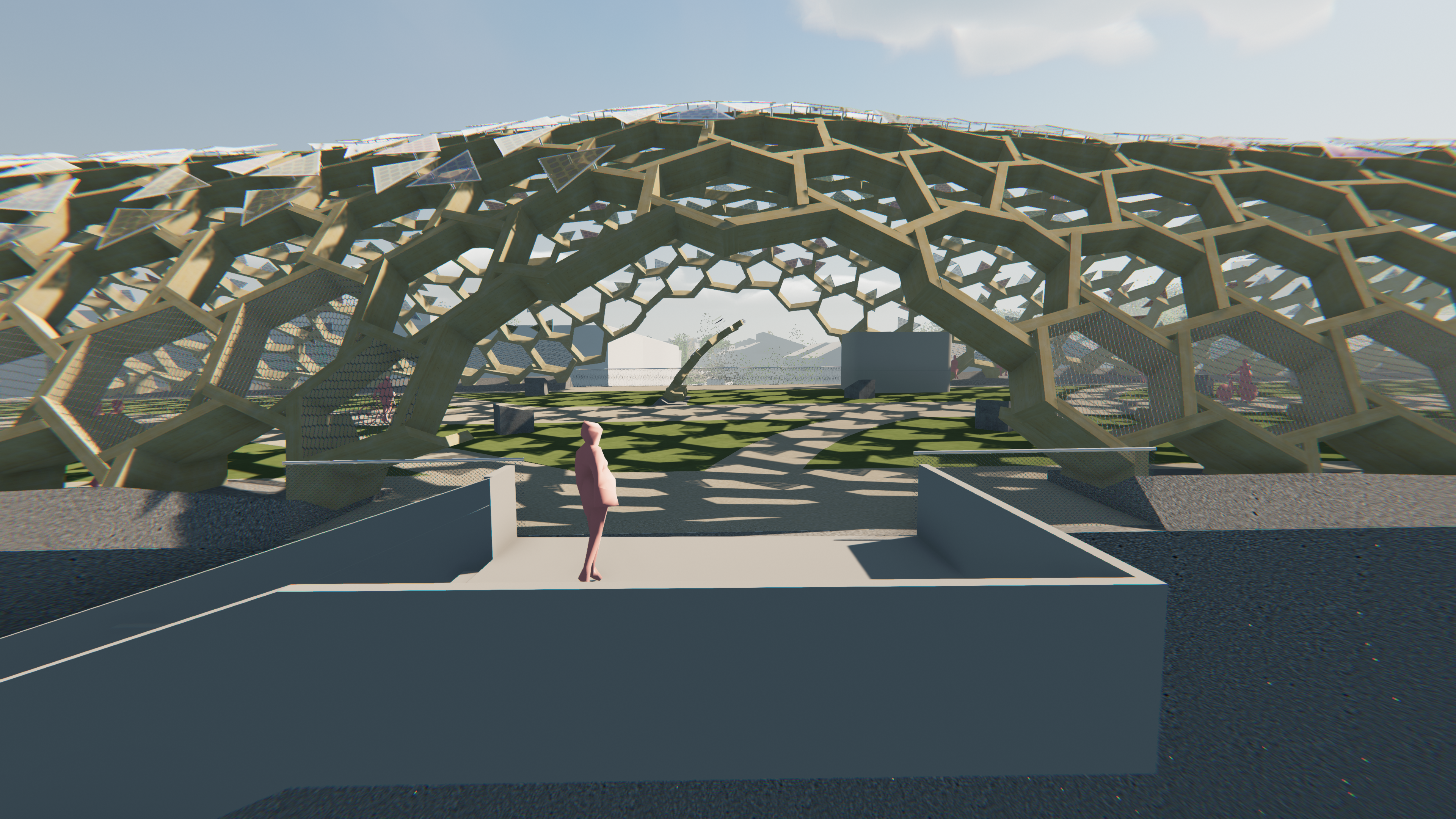
The mushrooms are each accompanied by two lateral holes, which have an arched appearance and draw visitors into the volume of the vaults. In addition to this, to further increase accessibility of the vault and to further segment the continuous volume, three pairs of smaller holes are arranged between each of the mushrooms. They form the vistas across the vault and offer more accesses by stairs or elevator.
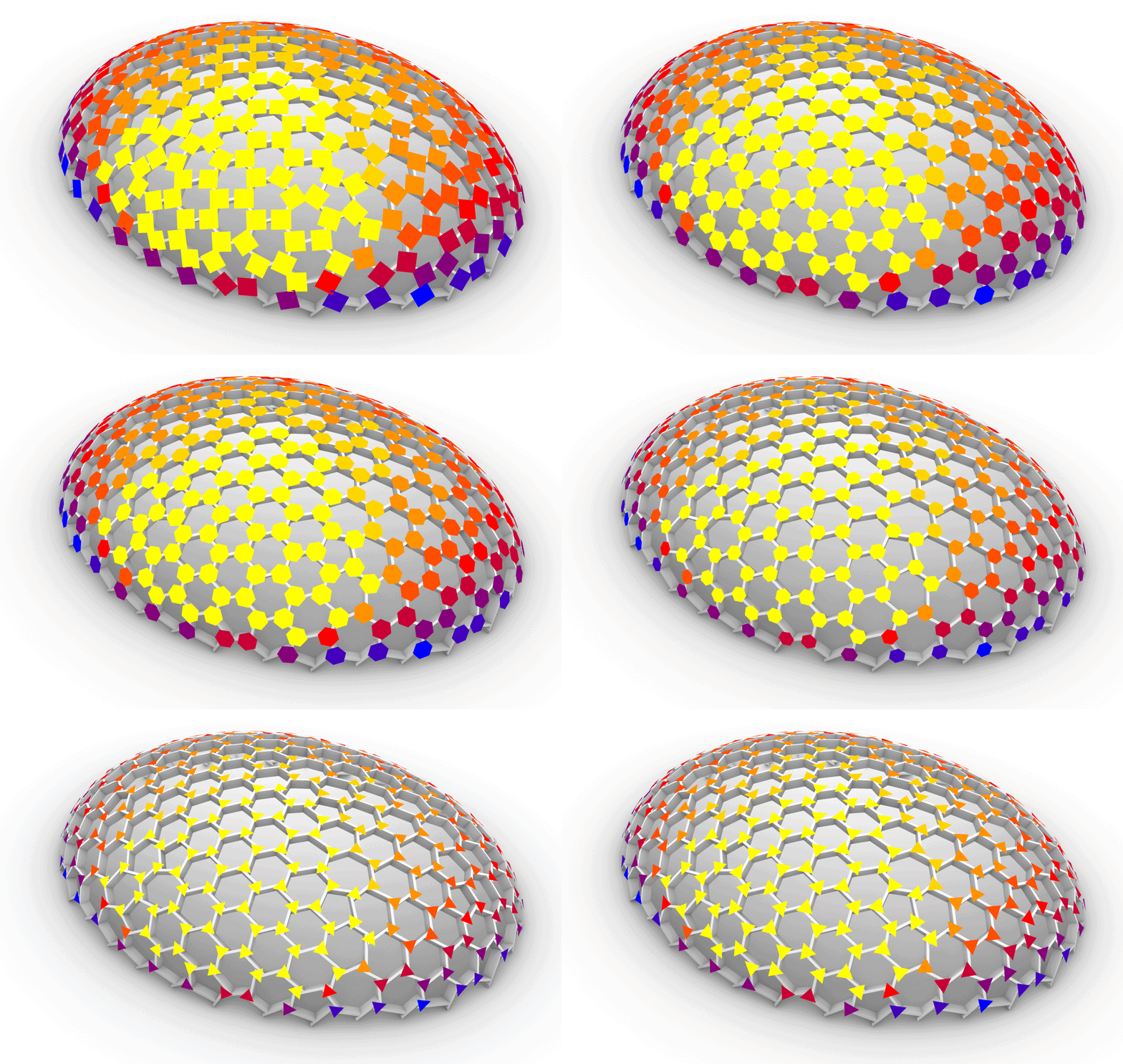
After all the above fine-tuning, you get the final volume of the vault. We translated this into the "reciprocal wooden frame". The frame consists of hexagons and special account points. At the node, each two beams butt each other and form the triangular accounts in threes. Each contact is only with two beams, so that the construction to connect the wooden beams can remain as simple as possible.
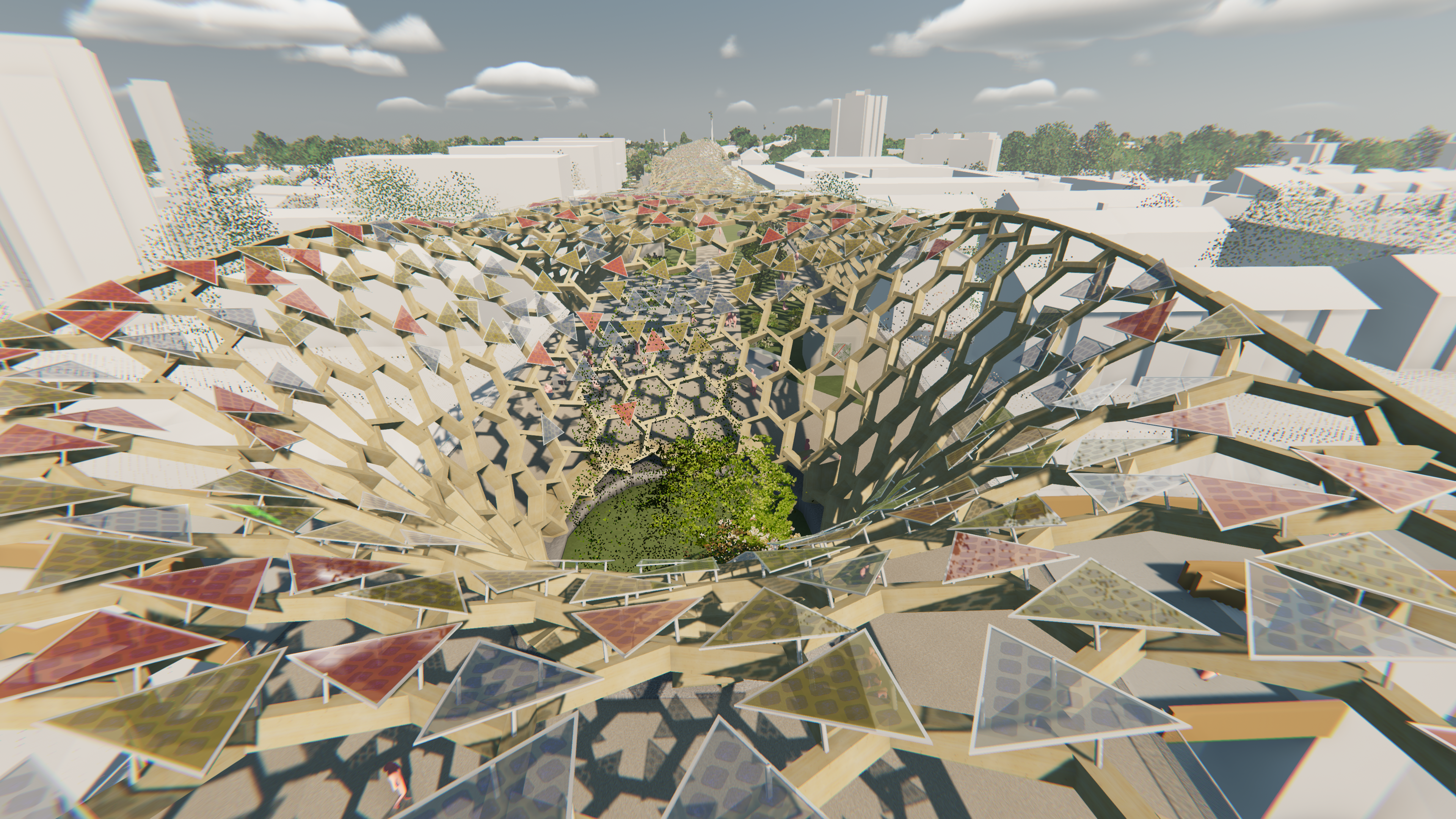
After the wooden frame was mapped on the entire roof shell, the PV panels were mounted on the frame. The triangular panels consist of rods, frame and glass, and PV cells. The glasses are randomly assigned in three colors to allow colorful light to enter below the undulating roof, creating colorful and vibrant "interiors".
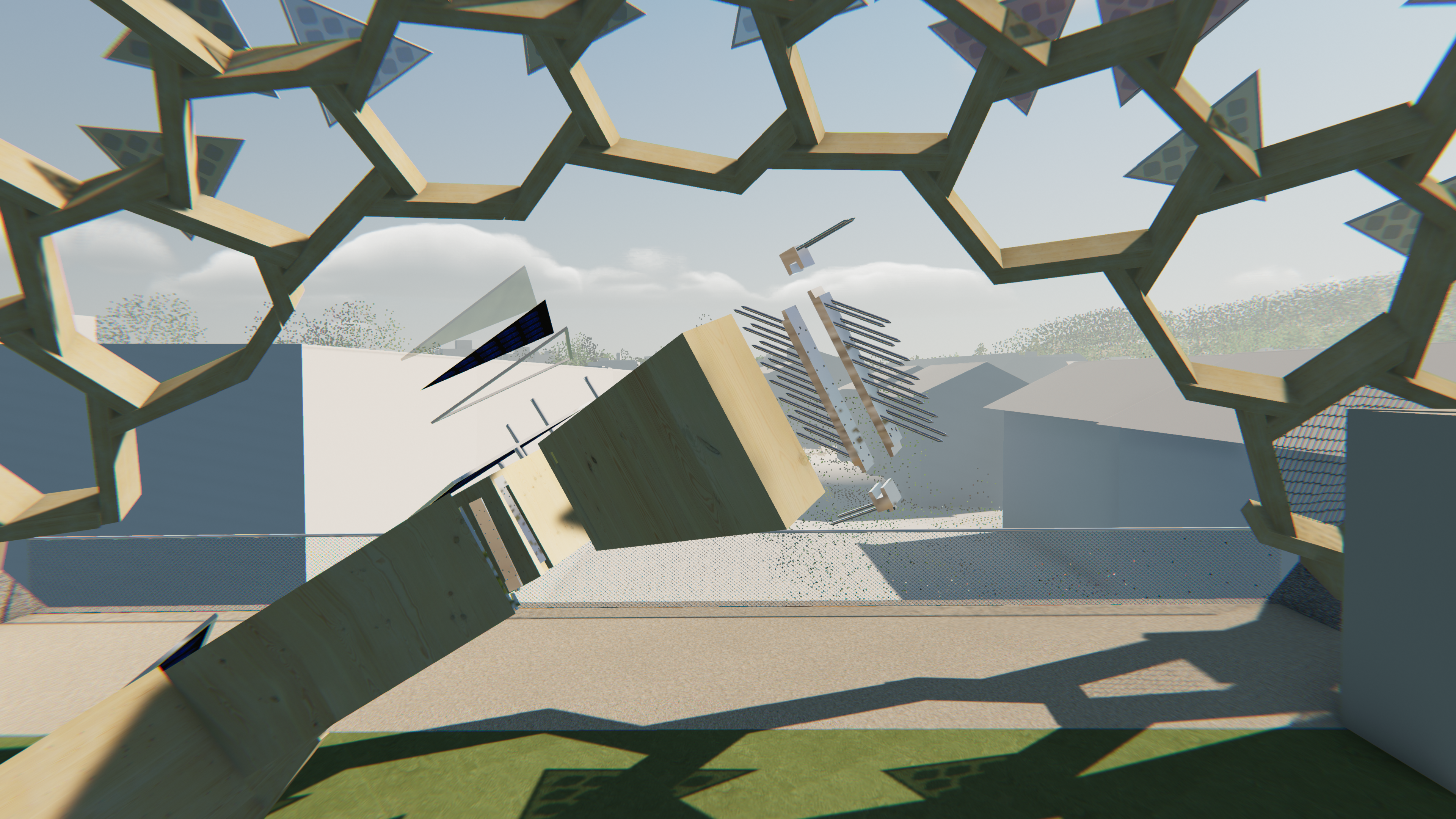
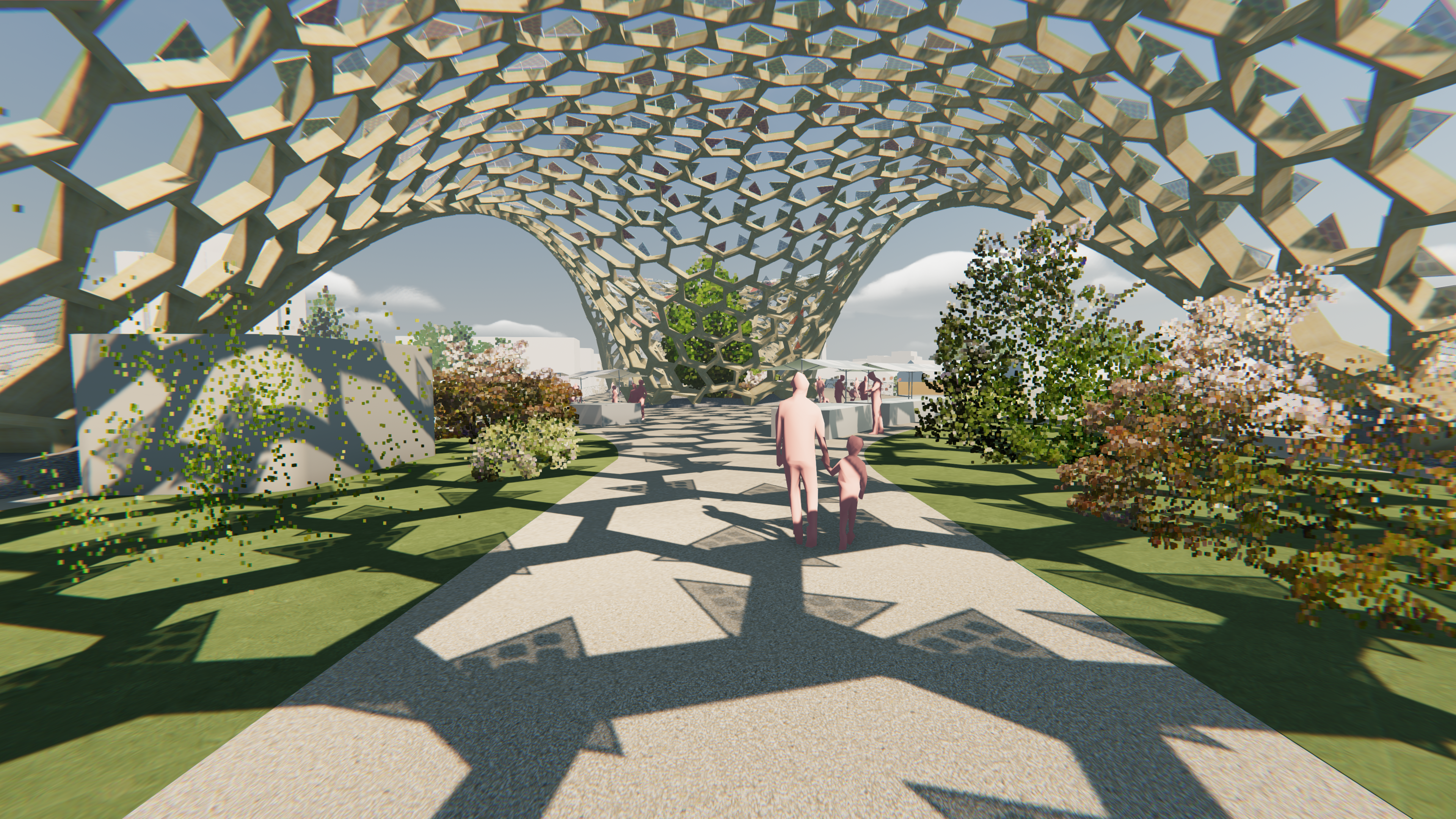
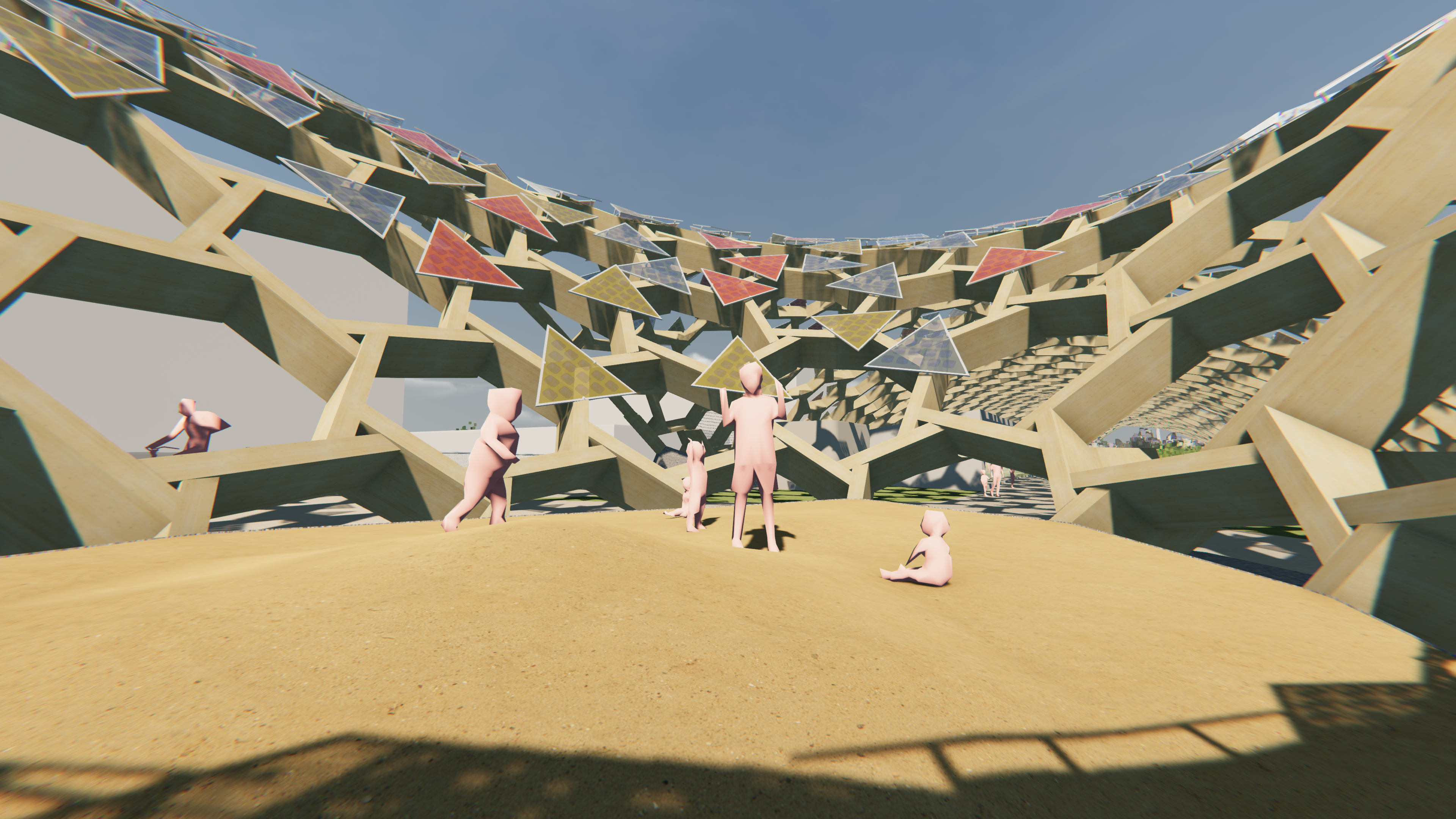
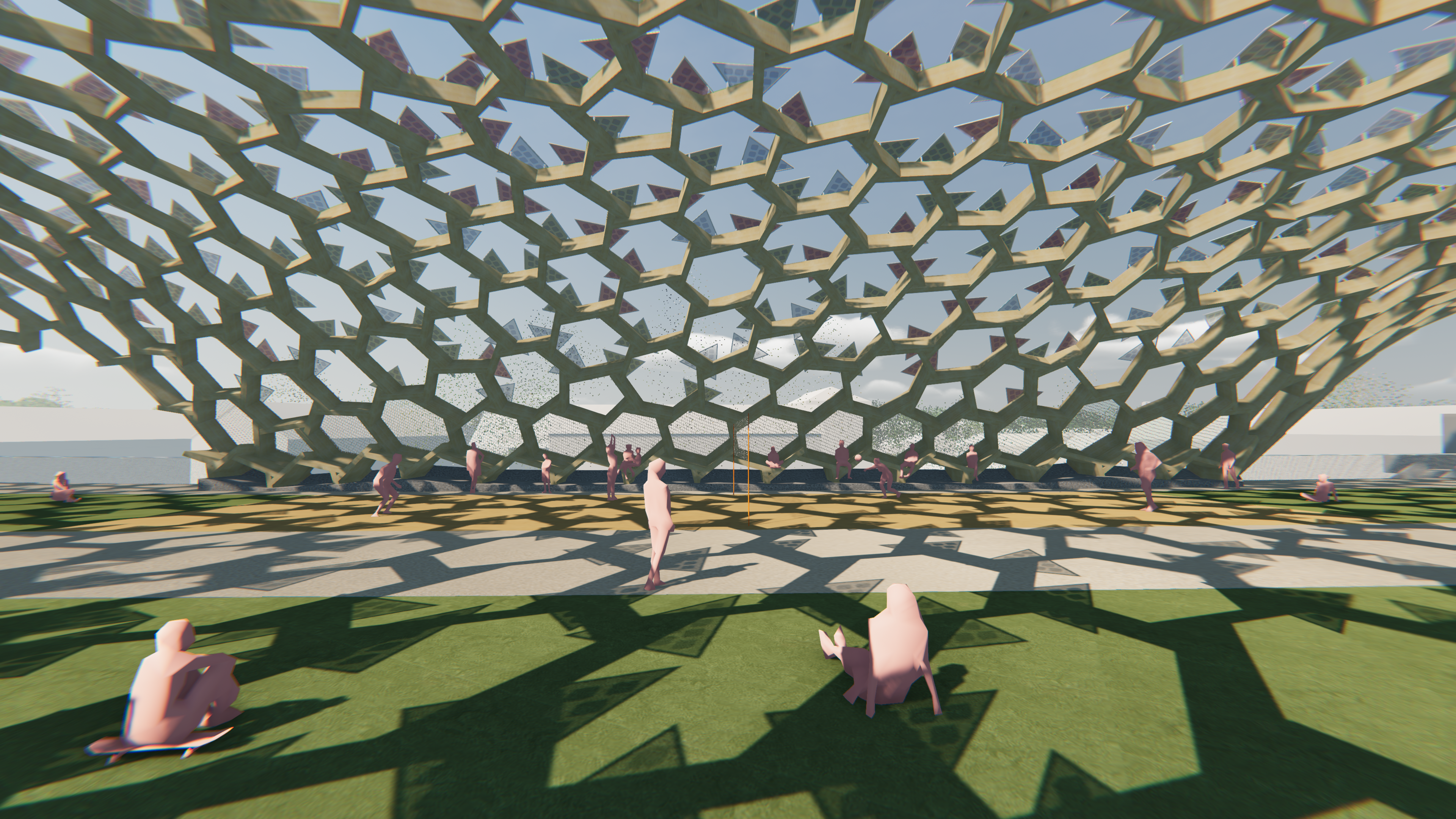
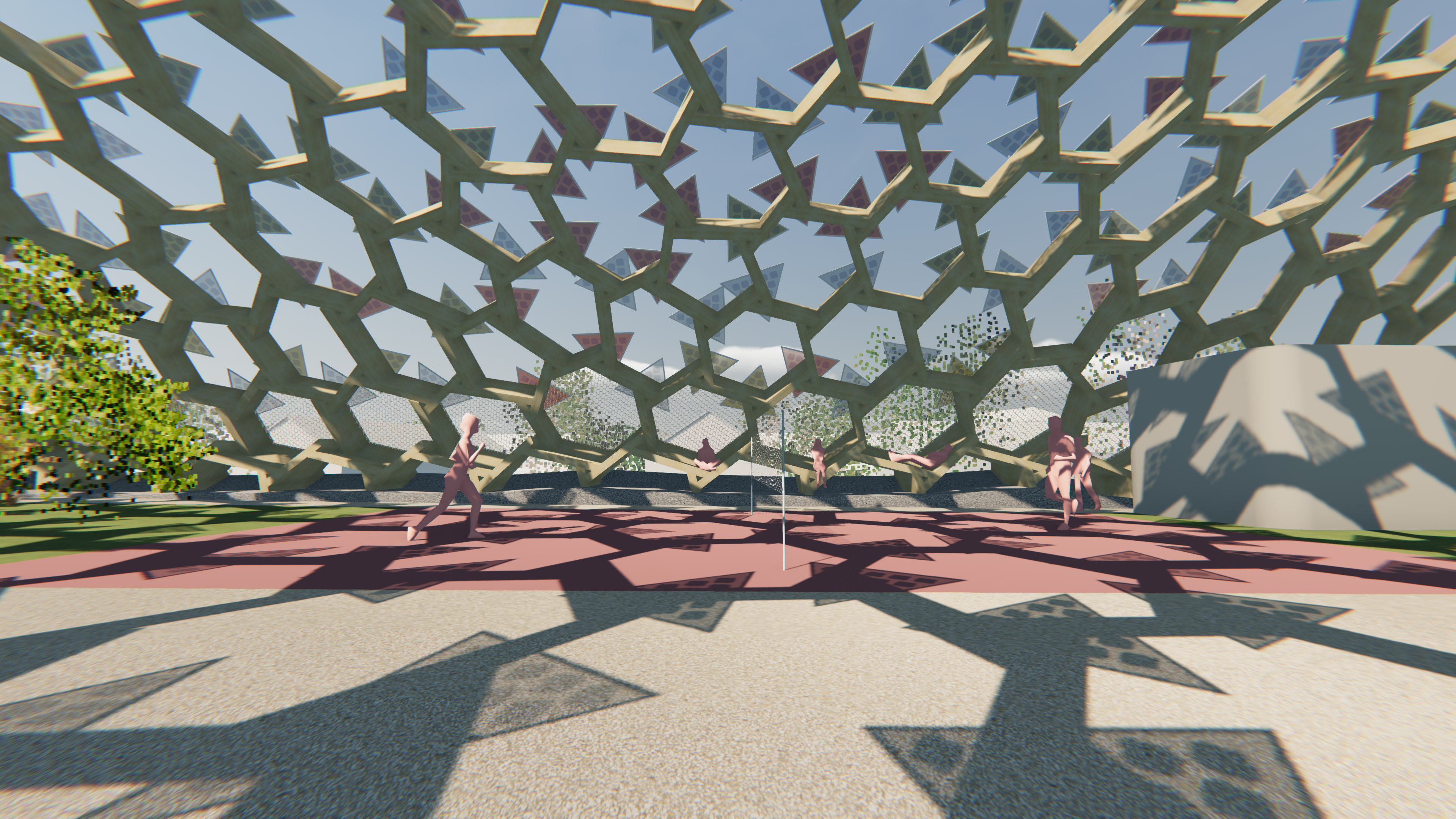
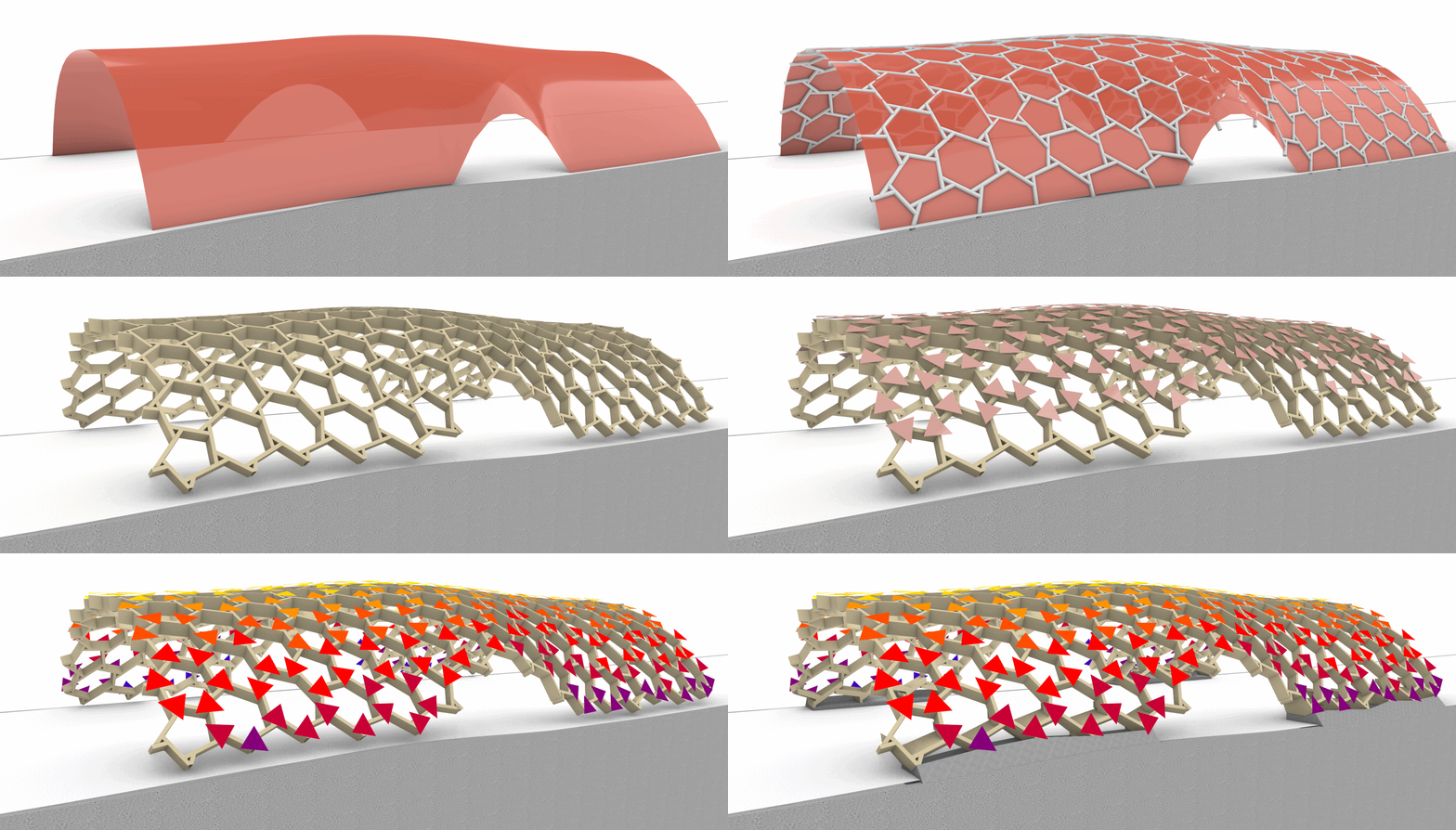
The design and realization of this spectacular structure are achieved using a Rhino Grasshopper script, divided into several modules:
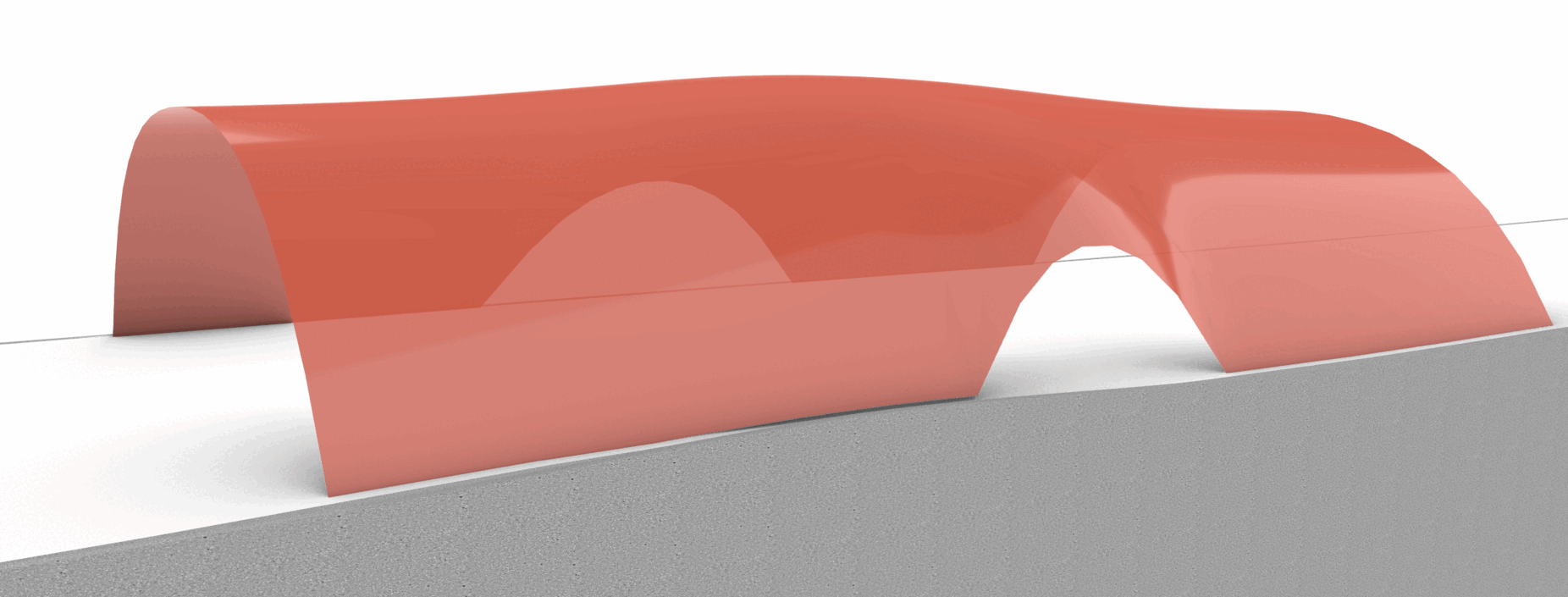
Module 1: A surface is generated to define the enclosure, functioning as a membrane under full tension. This ensures that its wooden translation will only experience compressive forces.
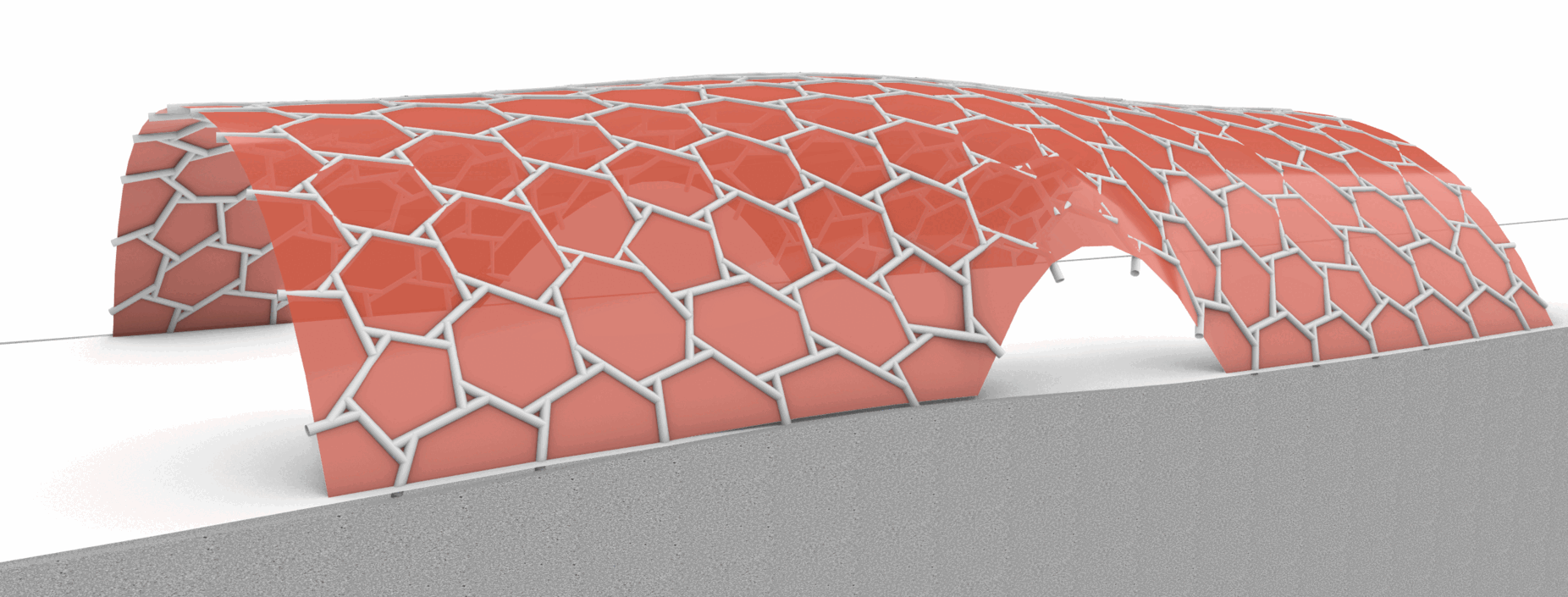
Module 2: To convert the surface into a reciprocal structure, it is first triangulated and then combined into polygons. It is crucial to orient these polygons as uniformly as possible. By slightly rotating the bars, the supporting elements establish a reciprocal relationship with one another.
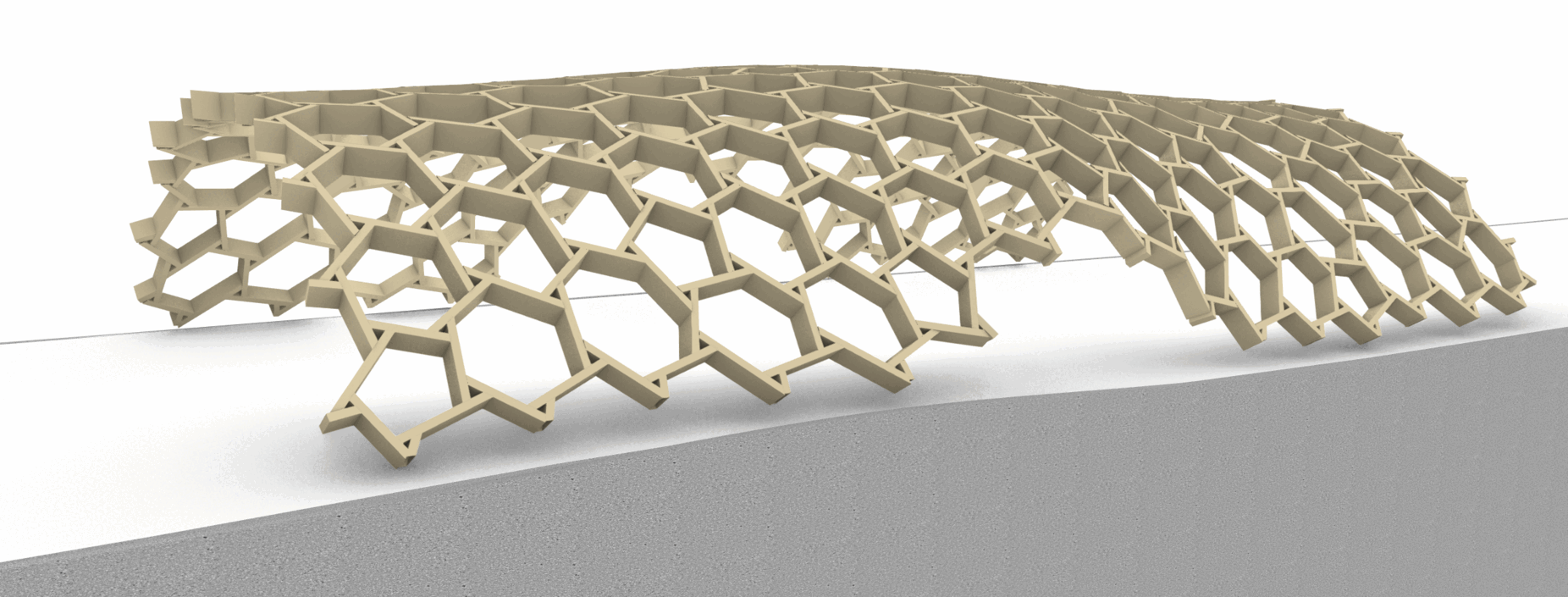
Module 3: The bars are transformed into wooden beams. At each joint, the beams are detailed for precise connections, with multiple standardized dimensions assigned based on the internal forces they must support.
Module 4: The beam connection joints are designed with the potential to accommodate solar panels. The orientation and shape of these panels are resolved geometrically in this step.
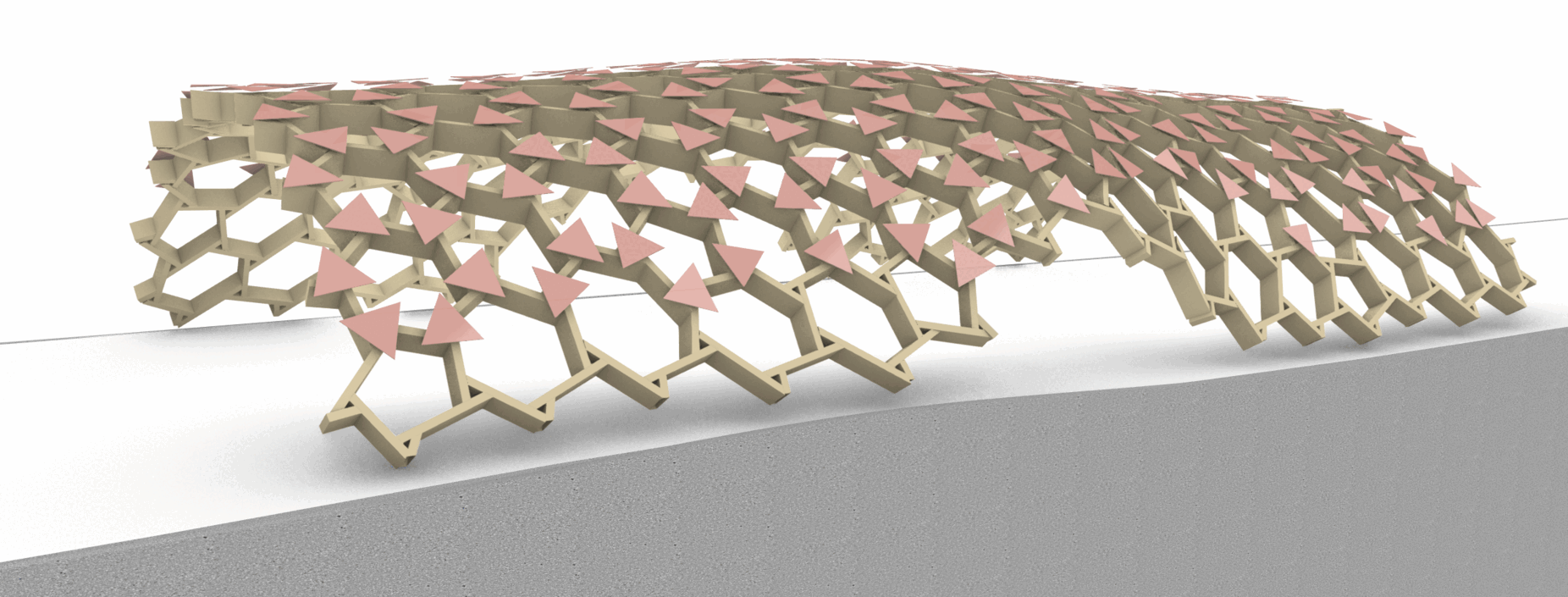
Module 5: Energy generation from the solar panels provides vital performance feedback for their placement. A sun-hour study is conducted to validate their positioning. Subsequently, machine learning techniques are introduced to optimize their orientation.
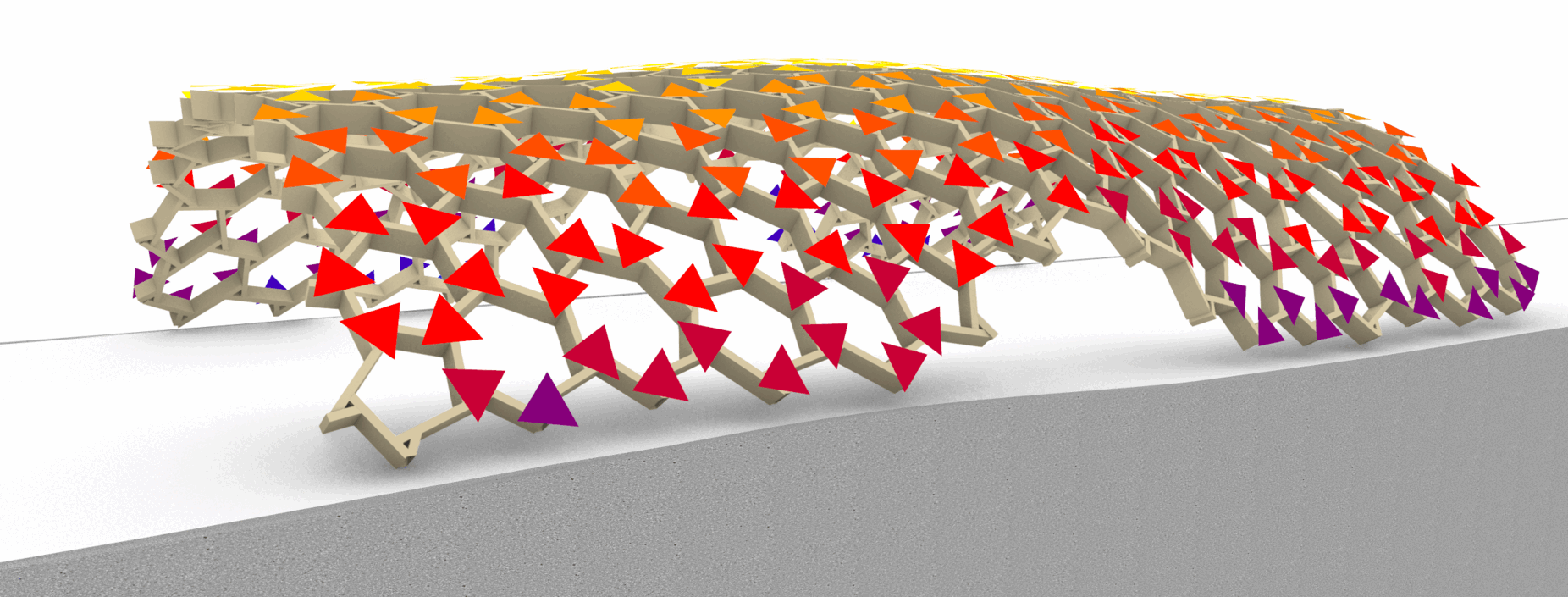
Module 6: Construction details, such as adaptive landings and integrated furniture, are generated in alignment with the overall design.
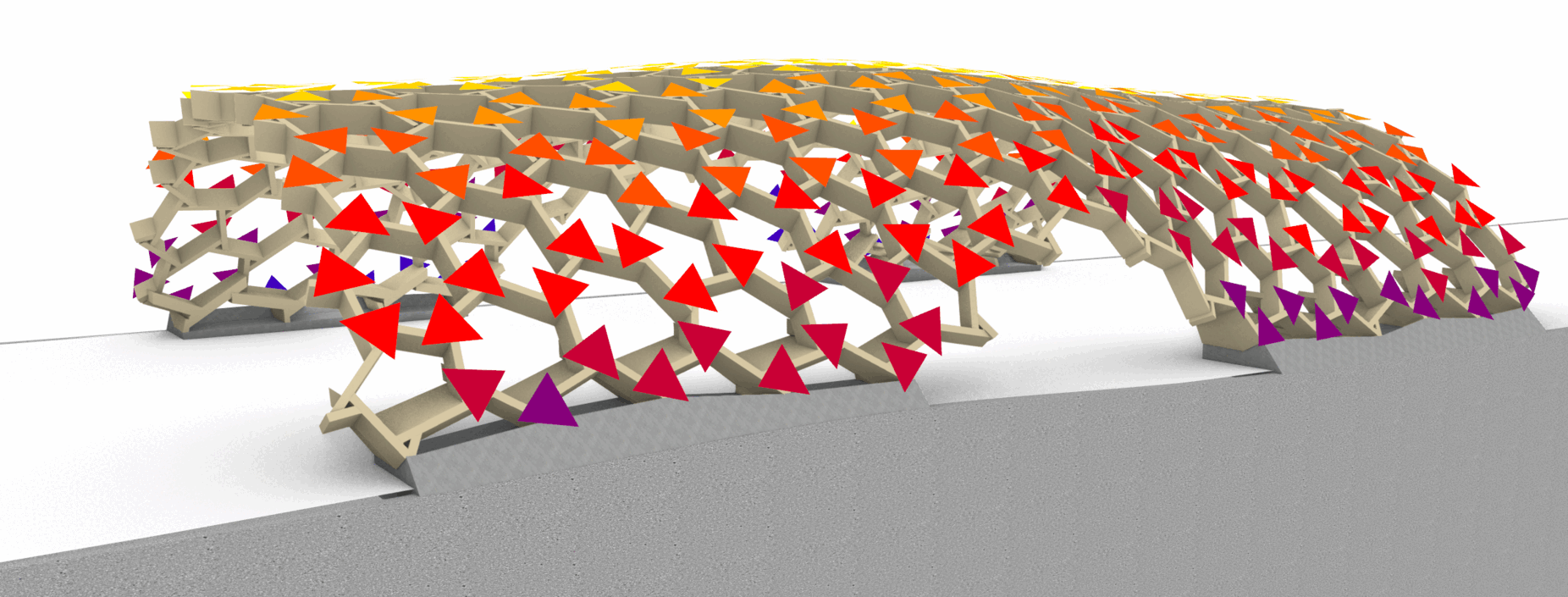
This step-by-step modular approach ensures both structural and functional excellence while integrating energy efficiency and adaptability.
Implementation of Machine Learning in Design and Optimization
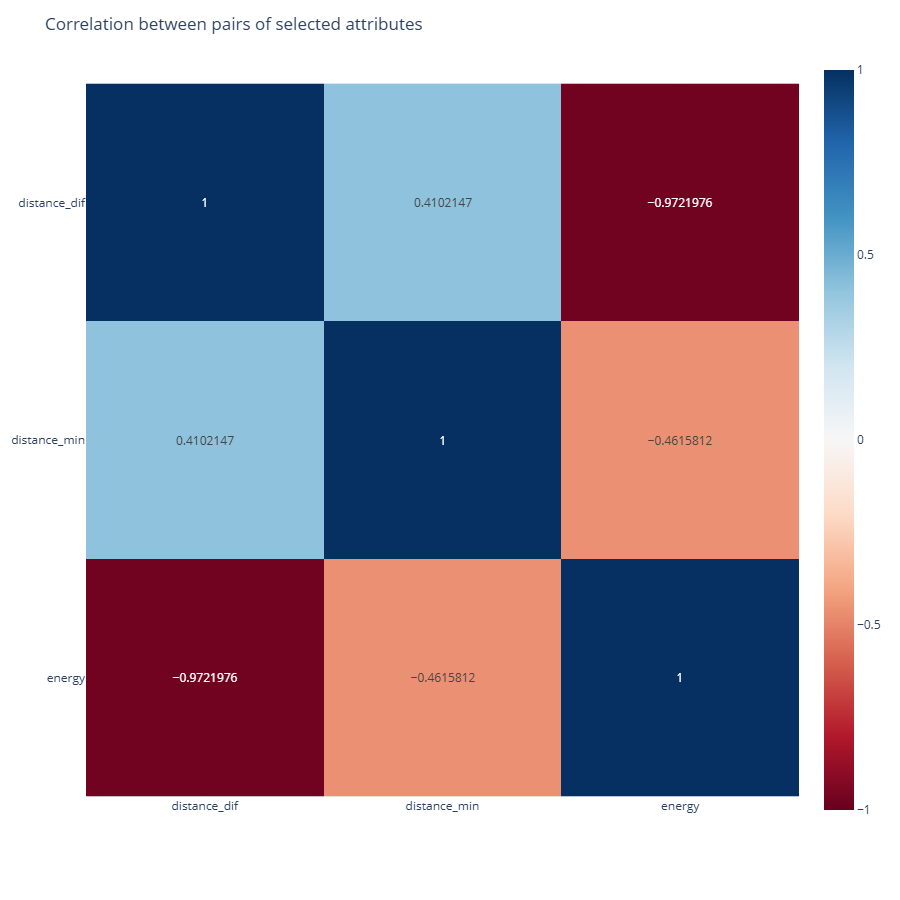
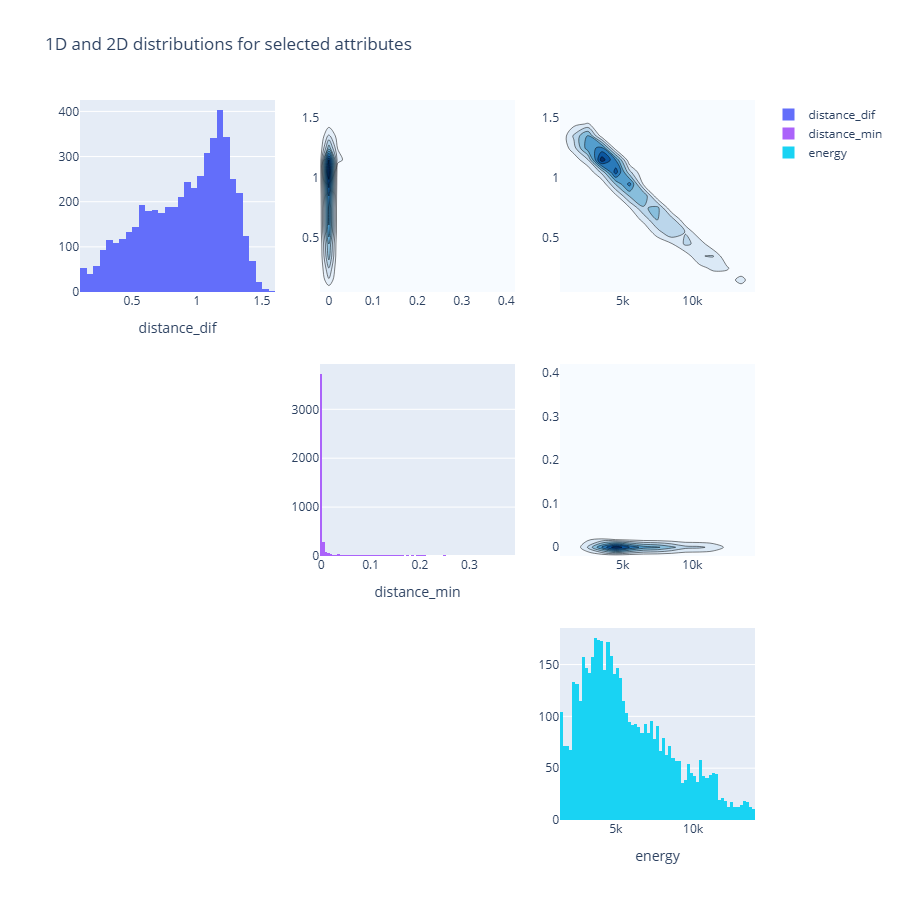
To thoroughly analyze the various design parameters that influence the appearance and energy output of the solar panels, a specialized machine-learning tool, Axid_ ara, designed specifically for use with Grasshopper, is integrated into the workflow. This tool enhances the design process by enabling data-driven optimization and informed decision-making.
Key design parameters considered include the rotation angle of each panel, the radius of the panel surface, and a range of geometric variations. These parameters allow for a nuanced exploration of how subtle changes in design can impact both functionality and aesthetics.
As performance attributes, the distances between panels and their efficiency in energy generation serve as critical feedback metrics. These metrics guide the iterative design process, ensuring that the final configuration maximizes both structural harmony and energy output.
By leveraging Axid_ara, the workflow benefits from advanced computational analysis, enabling the exploration of complex relationships between design variables and performance outcomes. This integration ultimately fosters a more refined and efficient solar panel design, ensuring optimal energy production and a cohesive architectural expression.